
Buying a mattress is not a one-size-fits-all decision. A sleeping surface that supports a growing child might cause severe lumbar strain for a senior, while a couple may prioritize motion isolation above all else. Matching the right mattress specifications to specific user demographics ensures optimal spinal alignment, pressure relief, and long-term sleep health.
1. Children and Teenagers: Support for Growing Spines
Children and teens undergo rapid musculoskeletal development. Their bodies require firm, uniform support to foster proper spinal posture and prevent slouching habits during sleep.
- Key Needs: Firm-to-medium-firm support, breathable materials, and non-toxic/hypoallergenic fabrics.
- Best Choice: Natural latex or firm innerspring mattresses. Avoid deep-contouring memory foam that allows sinking, as it can misalign a developing spine.
2. Office Workers and Sedentary Adults: Lumbar & Pressure Relief
Adults spend long hours at desks or computers, leading to lower back stiffness and shoulder pressure. They require a balanced mattress that cradles pressure points while maintaining neutral alignment.
- Key Needs: Targeted lumbar support, pressure redistribution, and muscle relaxation.
- Best Choice: Hybrid mattresses combining pocketed coils with gel memory foam. The foam cushions the hips and shoulders, while the pocketed coils maintain lower back elevation.
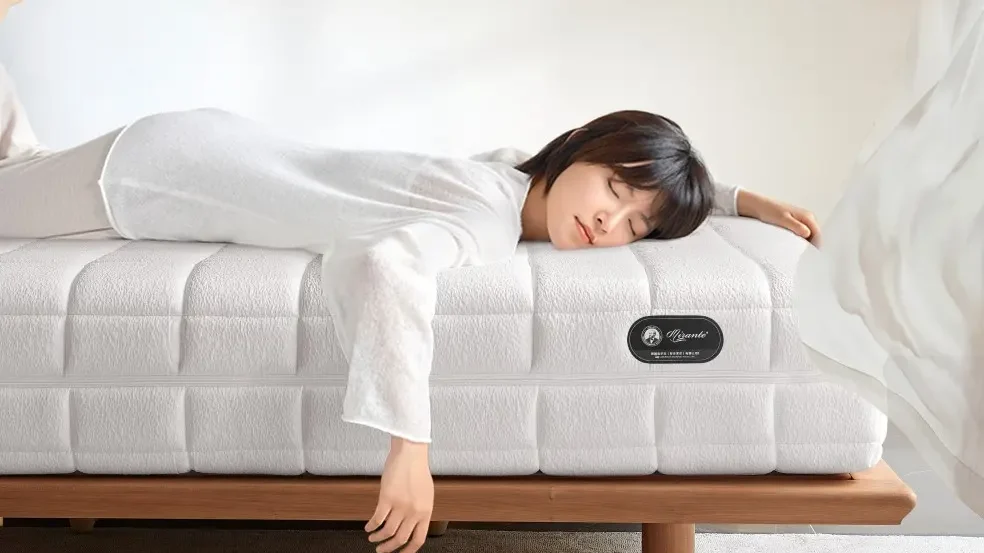
3. Pregnant Women: Side-Sleeping Comfort & Motion Control
Pregnancy brings shifting center-of-mass, elevated body temperature, and the necessity to sleep on one’s side during the second and third trimesters.
- Key Needs: Strong edge support, cooling technology, body-contouring side support, and high motion isolation.
- Best Choice: Cooling gel hybrid or medium-soft memory foam with reinforced perimeter coils that prevent sinkage when getting in and out of bed.
4. Seniors and the Elderly: Mobility & Reinforced Firmness
Aging joints and weakening spinal support mean seniors need mattresses that are easy to move around on. Overly soft mattresses make shifting positions or standing up difficult.
- Key Needs: Firm support, responsive bounce for easy movement, and strong edge stability.
- Best Choice: Firm natural latex or firm pocket-coil hybrid mattresses. Avoid thick memory foam toppers that create a “sinking” trap.
5. Couples: Motion Isolation & Dual Preferences
Light sleepers and couples with conflicting firmness preferences often struggle to find common ground on a single mattress surface.
- Key Needs: Zero motion transfer, quiet coil construction, and temperature regulation.
- Best Choice: Individually wrapped pocket-coil hybrids or dual-firmness split mattresses.
Mattress Selection Matrix by Audience
| Target Group | Ideal Firmness (1–10) | Primary Feature Required | Recommended Mattress Type |
| Kids & Teens | Firm (7–8) | Spinal alignment & Breathability | Natural Latex / Innerspring |
| Office Workers | Medium-Firm (5.5–6.5) | Lumbar support & Pressure relief | Hybrid (Coils + Foam) |
| Pregnant Women | Medium (4.5–5.5) | Edge stability & Cooling gel | Gel Memory Foam / Hybrid |
| Seniors | Firm (6.5–7.5) | Mobility support & Edge reinforcement | Firm Latex / Pocket-Coil |
| Couples | Medium / Split | Motion isolation & Quiet coils | Pocketed Coil Hybrid |