
A mattress collects more than just dust over time. Sweat, body oils, dead skin cells, pet hair, spills, and odors can build up on the surface and inside the fabric. Regular mattress cleaning can help keep your sleeping environment fresh and protect your mattress from unnecessary wear.
So, how do you clean a mattress properly?
The best approach is to remove the bedding, vacuum the mattress, treat stains carefully, deodorize the surface, and allow the mattress to dry completely before putting the bedding back on. The exact method can vary depending on the mattress material, so always check the manufacturer’s care instructions first.
In this guide, we explain how to clean a mattress at home, how to remove common stains and odors, how to clean different mattress types, and how often you should clean your mattress.
How to Clean a Mattress: Quick Answer
To clean a mattress at home:
- Remove all bedding and wash it.
- Check the mattress care label.
- Vacuum the entire mattress surface and sides.
- Spot-clean stains with an appropriate cleaner.
- Use baking soda to help absorb moisture and odors.
- Vacuum the baking soda thoroughly.
- Allow the mattress to air dry completely.
- Replace the mattress protector and clean bedding.
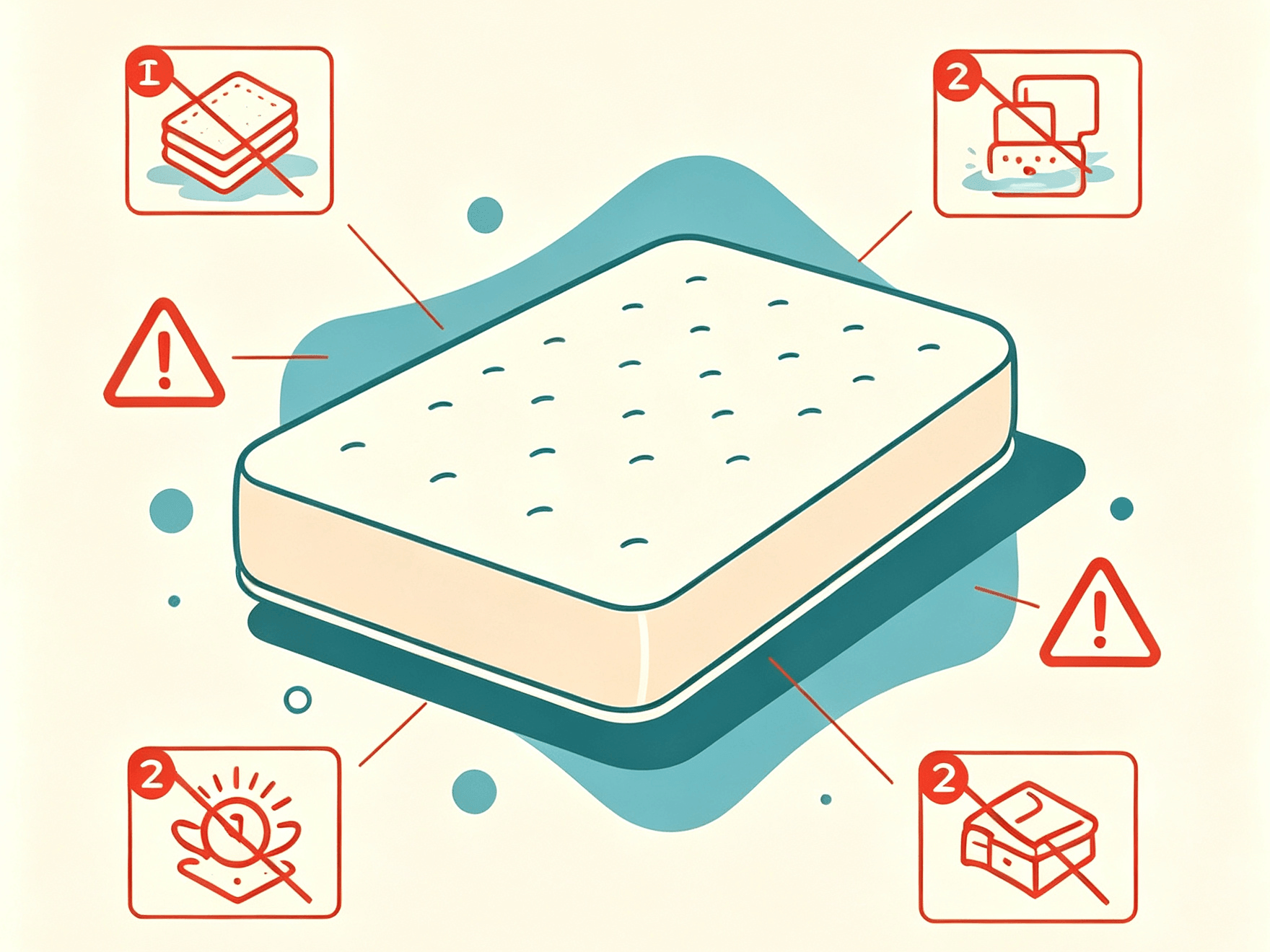
The most important rule is to avoid soaking the mattress. Excess moisture can penetrate the interior and make drying difficult. This is particularly important for foam mattresses.
What You Need to Clean a Mattress
Before you start, prepare the following supplies:
- Vacuum cleaner with an upholstery attachment
- Clean microfiber cloths or towels
- Baking soda
- Mild, unscented detergent
- Cold water
- Spray bottle
- Enzyme cleaner for biological stains
- Fan or dehumidifier
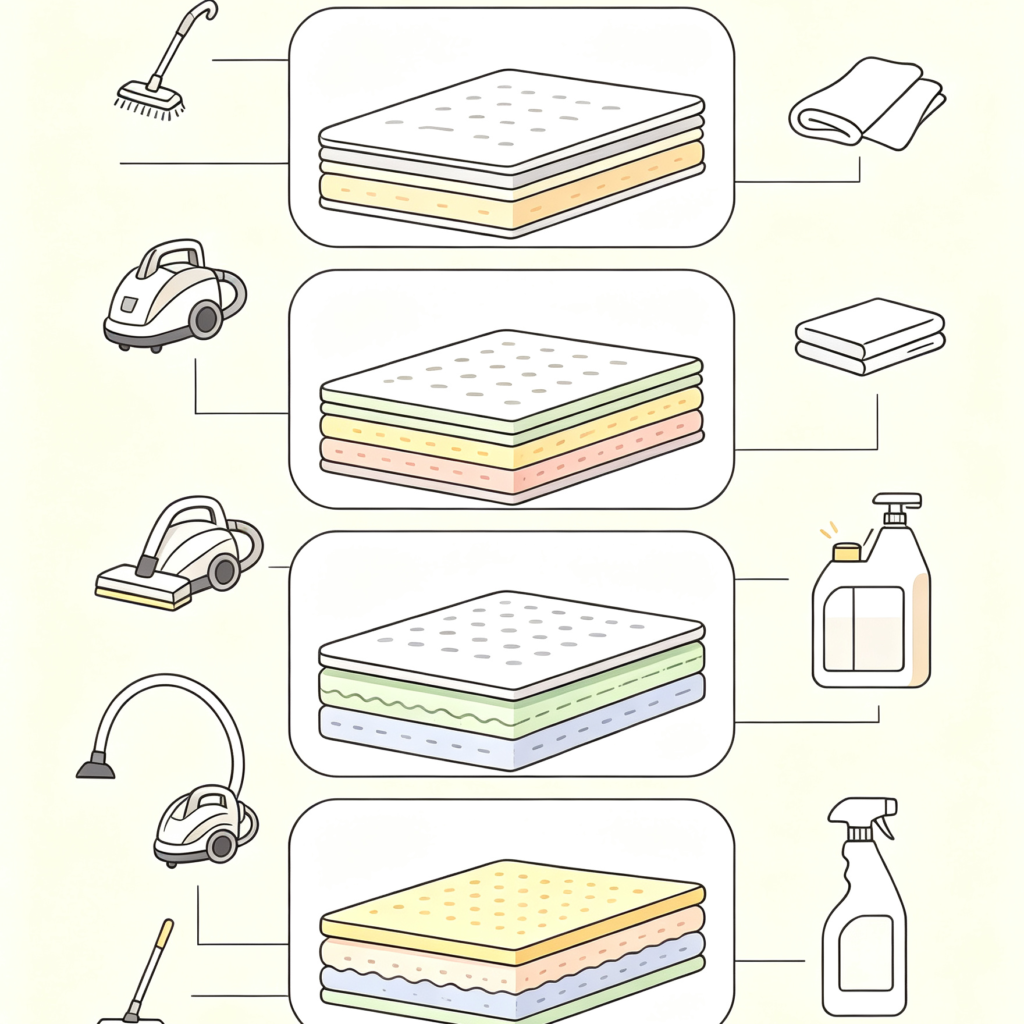
You do not need to use every product for every cleaning job. The right cleaning method depends on the type of stain and the mattress manufacturer’s care instructions.
Avoid using harsh chemicals unless the mattress manufacturer specifically recommends them.
Step 1: Remove and Wash All Bedding
Start by completely removing everything from the bed.
Remove:
- Sheets
- Pillowcases
- Blankets
- Duvet covers
- Mattress pads
- Mattress protectors
- Toppers
Wash the bedding according to its care label.
Cleaning the mattress while leaving dirty bedding on the bed defeats much of the purpose because oils, sweat, dust, and other debris can quickly transfer back onto the mattress.
Regularly washing bedding is also an important part of maintaining a cleaner sleep environment.
Step 2: Check the Mattress Care Instructions
Before applying any cleaning product, check the mattress label or manufacturer’s care instructions.
Different mattress constructions can have different cleaning requirements.
For example:
- Memory foam can be sensitive to excess moisture.
- Latex may require specific cleaning products.
- Spring mattresses can have different cover and upholstery constructions.
- Hybrid mattresses combine multiple materials and should be cleaned according to the manufacturer’s instructions.
If the mattress has a removable cover, check whether the manufacturer specifically allows the cover to be removed and machine washed.
Do not assume that a removable-looking cover is machine washable.
Step 3: Vacuum the Mattress
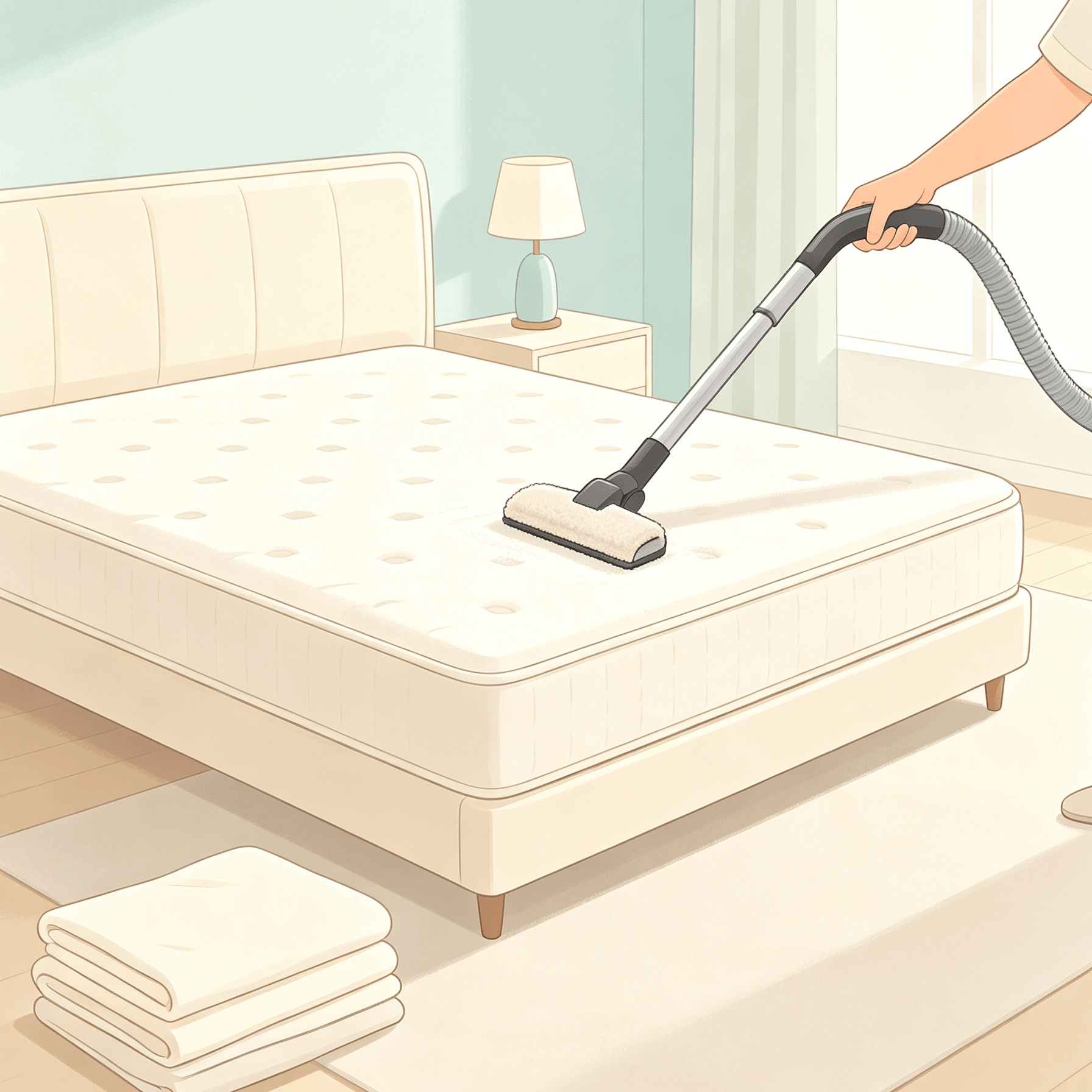
Vacuuming is one of the most important steps when cleaning a mattress.
Use an upholstery attachment and slowly vacuum:
- The entire sleeping surface
- The sides
- Seams
- Quilted areas
- Corners
- Around handles
- Areas near the edge of the mattress
Pay particular attention to seams and quilting because dust and debris can accumulate in these areas.
Vacuuming removes loose dirt, hair, dust, skin flakes, and other debris before you introduce moisture to the mattress.
Step 4: Spot-Clean Mattress Stains
Do not automatically wet the entire mattress.
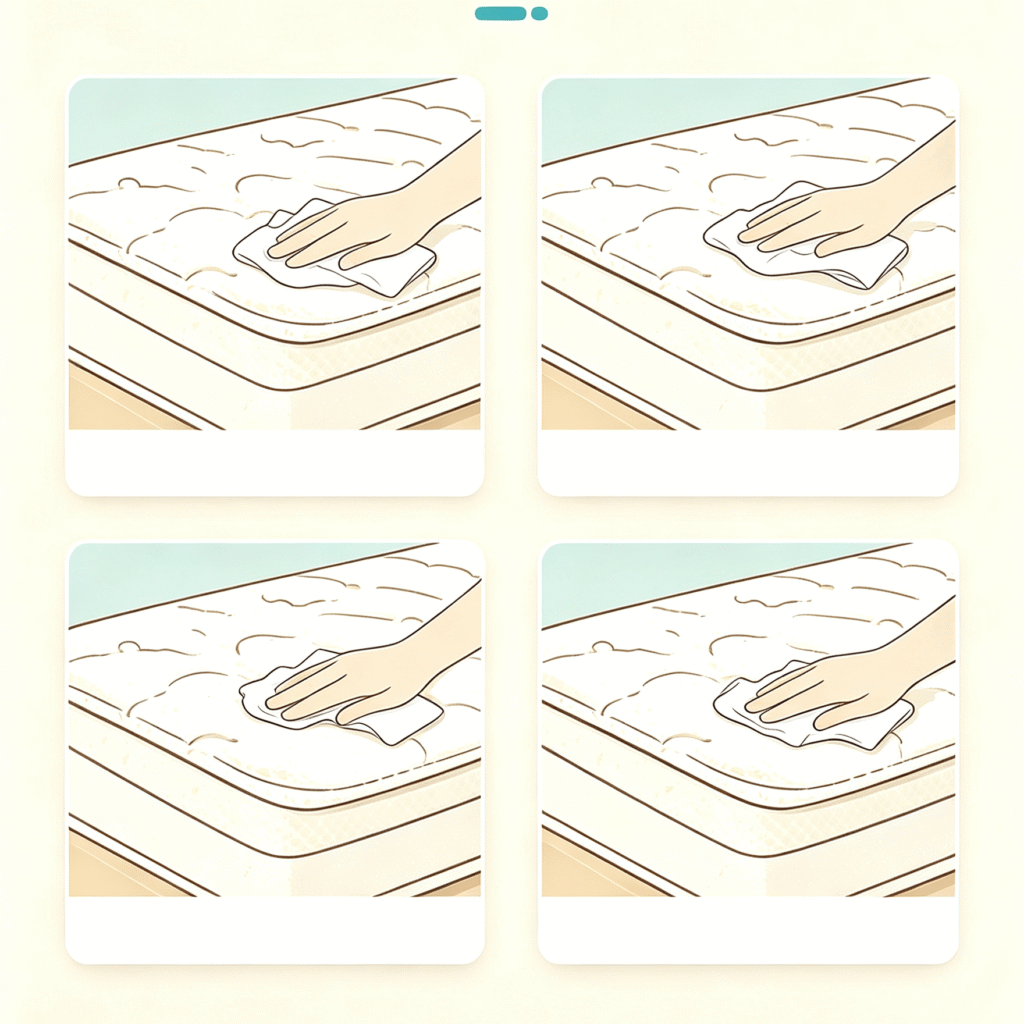
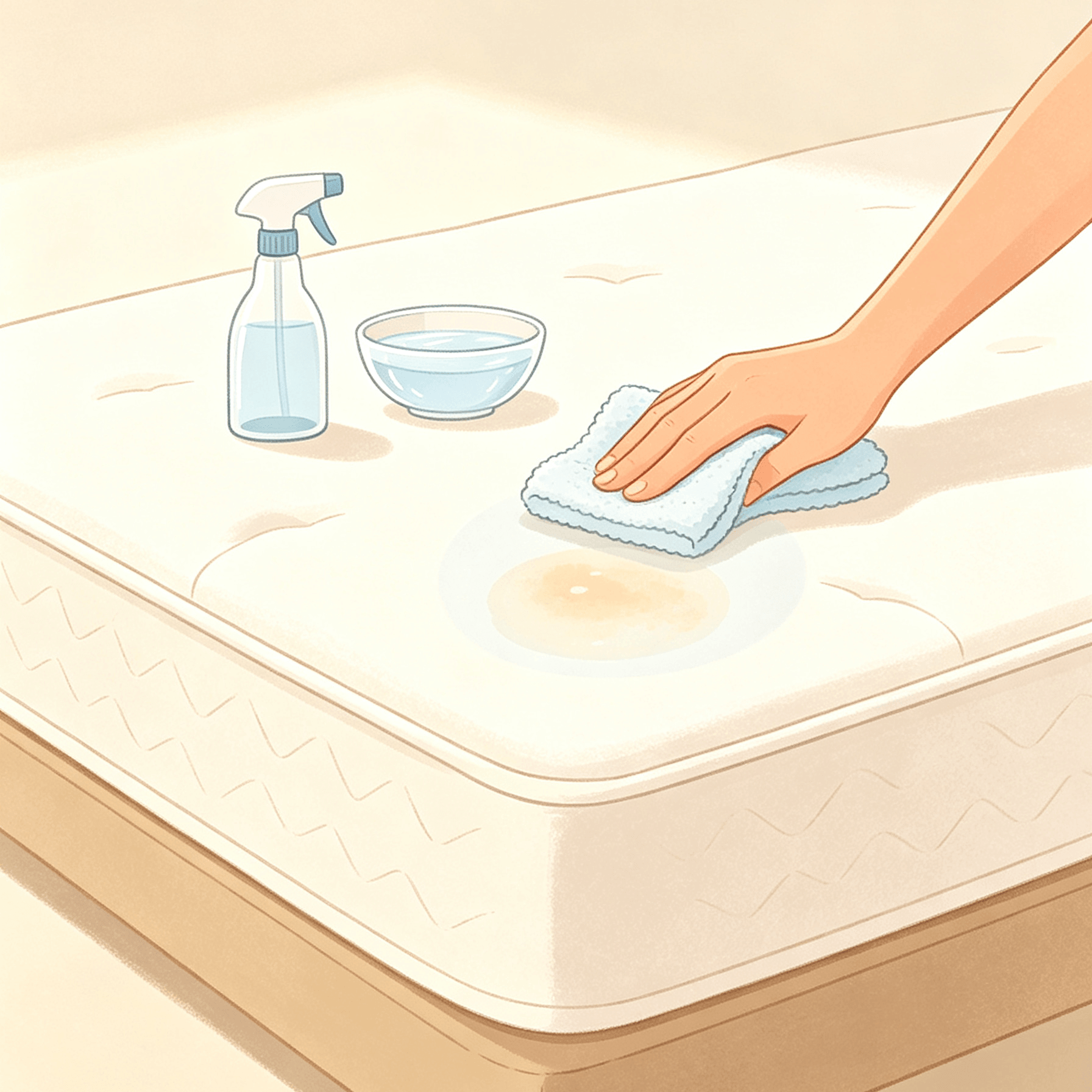
Instead, identify individual stains and clean them locally.
Apply a small amount of suitable cleaning solution to a clean cloth rather than soaking the mattress directly.
Then gently blot the stain.
Avoid aggressive scrubbing because it can spread the stain or damage the mattress fabric.
A simple general approach is:
Apply → Blot → Rinse lightly → Blot dry
Use as little liquid as possible.
For biological stains such as sweat, urine, or blood, an appropriate enzyme cleaner may be useful. Always follow the product instructions and check compatibility with the mattress material.
How to Remove Common Mattress Stains
Different stains require different approaches.
How to Remove Sweat Stains from a Mattress
Sweat can leave yellowish or darker discoloration over time.
For a small stain:
- Vacuum the area.
- Apply a small amount of suitable cleaning solution to a cloth.
- Gently blot the affected area.
- Use a separate cloth lightly dampened with clean water.
- Blot again.
- Allow the area to dry completely.
Do not saturate the mattress.
How to Remove Urine from a Mattress
For fresh urine, immediately blot as much moisture as possible using clean towels.
Then use an appropriate enzyme cleaner designed for biological stains, following its instructions.
Avoid using excessive water because moisture can penetrate deeper into the mattress.
After cleaning, ventilate the room and allow the mattress to dry completely.
How to Remove Blood from a Mattress
Use cold water rather than hot water when treating a fresh blood stain.
Blot rather than scrub.
For stubborn stains, an appropriate stain treatment may be used if it is compatible with the mattress fabric.
Always test a cleaning product on a small, inconspicuous area first.
How to Remove Food and Drink Stains
First remove any solid residue.
Then blot the affected area with a clean cloth.
Use a mild cleaning solution appropriate for the mattress material and avoid soaking the mattress.
The faster a spill is treated, the less likely it is to become a permanent stain.
Step 5: Deodorize the Mattress with Baking Soda
Baking soda is commonly used as a simple way to freshen a mattress and absorb moisture and odors.
After spot-cleaning and allowing the surface to become dry:
- Sprinkle a thin layer of baking soda over the mattress.
- Leave it for several hours.
- Keep the room well ventilated.
- Vacuum the baking soda thoroughly.
For stronger odors, leaving the baking soda on the mattress for several hours can give it more time to absorb moisture and odor. Sleep Foundation also recommends baking soda as part of its mattress-cleaning process.
Do not mix multiple household cleaning chemicals together.
Step 6: Vacuum the Mattress Again
After the baking soda has been left on the mattress for several hours, vacuum the entire surface again.
Use the upholstery attachment and make sure you remove the remaining powder from:
- The top
- Sides
- Seams
- Quilting
- Edges
Take your time with this step.
Leaving cleaning powder or residue inside the mattress fabric is not the goal.
Step 7: Let the Mattress Dry Completely
This step is easy to overlook but extremely important.
Before replacing the sheets, make sure the mattress is completely dry.
Open windows if appropriate and improve airflow with a fan or dehumidifier.
Do not cover a damp mattress with sheets.
Excess moisture trapped inside a mattress can create an environment where unwanted odors and other moisture-related problems become more likely.
For foam mattresses in particular, avoid excessive liquid and allow plenty of drying time.
How to Clean Different Types of Mattresses
Not every mattress should be cleaned in exactly the same way.
How to Clean a Memory Foam Mattress
Memory foam mattresses should generally be cleaned with minimal moisture.
The basic process is:
Vacuum → Spot-clean → Deodorize → Vacuum → Air dry
Avoid soaking memory foam because moisture can penetrate into the foam and take a long time to evaporate.
Always follow the manufacturer’s care instructions.
How to Clean a Spring Mattress
Spring mattresses typically have a fabric cover and a coil support system underneath.
Vacuum the surface, sides, seams, and edges carefully.
For stains, use a small amount of appropriate cleaning solution on a cloth rather than soaking the mattress.
A spring mattress can still contain foam, fiber, fabric, and other materials, so the coil system itself does not determine the entire cleaning method.
For more information about spring construction, see our guide:
What Is a Coil Mattress?
How to Clean a Hybrid Mattress
A hybrid mattress combines a spring support system with foam, latex, or other comfort materials.
Because hybrid mattresses contain multiple materials, avoid assuming that a cleaning method suitable for one material is automatically suitable for the entire mattress.
Use the manufacturer’s care instructions as the primary reference.
In general:
Vacuum → Spot-clean → Deodorize → Dry completely
How to Clean a Mattress Without a Vacuum
If you do not have a vacuum cleaner, you can still perform basic mattress maintenance.
Remove the bedding and use a soft brush to remove loose surface debris.
You can also use a clean, dry cloth around seams and edges.
However, a vacuum with an upholstery attachment is generally more effective for removing loose dust and debris from the mattress surface and seams.
If you regularly clean your mattress, investing in a suitable vacuum attachment can make the process easier.
How Often Should You Clean Your Mattress?
There is no single schedule that works for every household.
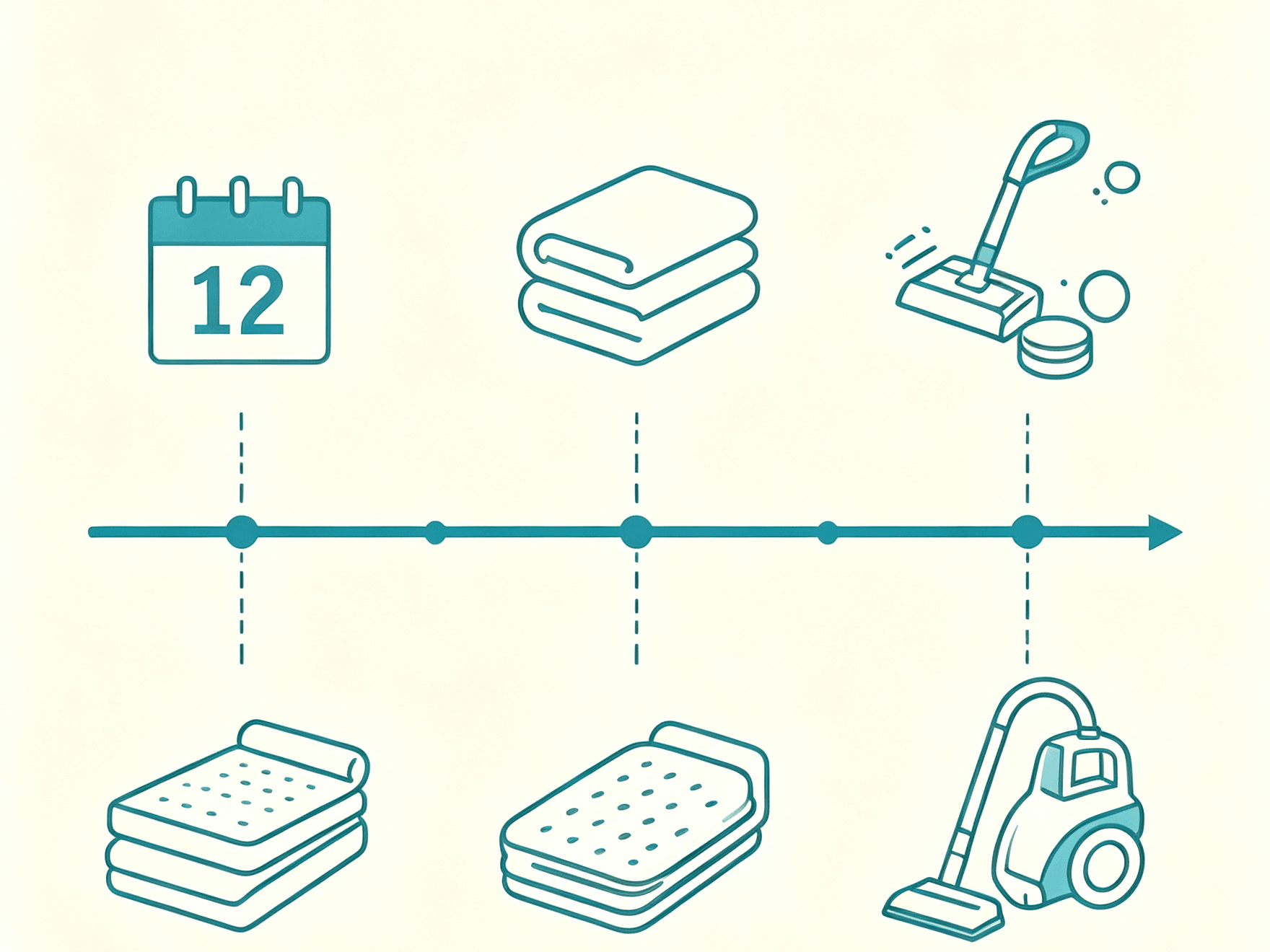
A practical routine is:
Weekly
Wash sheets and pillowcases according to their care instructions.
Monthly
Check the mattress for stains, odors, hair, and visible debris.
Every Few Months
Vacuum the mattress thoroughly and perform a deeper cleaning when needed.
About Every Six Months
Consider a more thorough mattress cleaning, depending on your environment, usage, pets, allergies, and the manufacturer’s care recommendations. Sleep Foundation recommends cleaning a mattress approximately every six months while emphasizing that manufacturer instructions should take priority.
How to Keep Your Mattress Cleaner for Longer
Cleaning is only one part of mattress care.
A mattress protector can help reduce the amount of sweat, spills, dust, and other debris that reaches the mattress.
Other useful habits include:
- Use a washable mattress protector.
- Wash bedding regularly.
- Keep pets off the mattress when possible.
- Clean spills as soon as they happen.
- Keep the bedroom well ventilated.
- Vacuum the mattress periodically.
- Avoid eating and drinking directly on the bed.
- Follow the mattress manufacturer’s care instructions.
Preventing contamination is usually easier than removing it later.
What Not to Do When Cleaning a Mattress
Avoid these common mistakes:
Do Not Soak the Mattress
Too much water can penetrate deep into the mattress and make drying difficult.
Do Not Scrub Aggressively
Hard scrubbing can damage fabric and spread stains.
Do Not Use Random Chemicals
A cleaning product that works on clothing or hard surfaces may not be suitable for mattress materials.
Do Not Mix Cleaning Chemicals
Mixing household cleaning products can create dangerous chemical reactions.
Do Not Cover a Wet Mattress
Always allow the mattress to dry completely before putting bedding back on.
Do Not Ignore the Care Label
The manufacturer’s instructions should always take priority over a generic cleaning method.
Frequently Asked Questions
Can I clean a mattress with baking soda?
Yes. Baking soda is commonly used to help absorb moisture and odors. Apply it to a dry mattress, leave it for several hours, and vacuum it thoroughly afterward.
How often should you clean a mattress?
A deeper mattress cleaning can be performed approximately every six months, while regular vacuuming and bedding care can be done more frequently. The ideal schedule depends on the mattress, household, and manufacturer’s care instructions.
Can you wash a mattress?
Most mattresses should not be saturated or machine washed as a complete unit. If a mattress has a removable cover, only wash it if the manufacturer says it is washable.
How do you get a bad smell out of a mattress?
Start by identifying the source of the odor. Vacuum the mattress, spot-clean the affected area if necessary, apply baking soda to help absorb odors, vacuum again, and allow the mattress to air out completely.
Can you steam clean a mattress?
Steam cleaning is not automatically suitable for every mattress. Excess heat and moisture can affect some materials. Check the manufacturer’s instructions before using a steam cleaner.
Can I use bleach to clean a mattress?
Bleach is generally not a good default choice for mattress cleaning because it can damage fabrics and materials. Use a cleaner specifically appropriate for the stain and mattress material, and follow the manufacturer’s care instructions.
How do I clean a mattress after an accident?
Remove the bedding immediately, blot as much liquid as possible, treat the affected area with a suitable cleaner, deodorize if appropriate, and allow the mattress to dry completely before using it again.
Final Thoughts
Learning how to clean a mattress does not require complicated equipment or harsh chemicals.
The most effective routine is simple:
Wash the bedding → Vacuum → Spot-clean → Deodorize → Vacuum again → Dry completely → Protect the mattress
The most important thing is to avoid excessive moisture and choose cleaning products based on the mattress material and type of stain.
Regular maintenance can help keep your mattress fresher and protect your investment over time.
If you are also comparing mattress constructions, our guide to What Is a Coil Mattress? explains how coil systems work and how different spring designs affect mattress performance.