
Choosing between a hybrid mattress and a memory foam mattress can be confusing because both offer cushioning and support, but they achieve these qualities in different ways. One combines a spring support system with comfort layers, while the other relies on foam throughout its construction.
The better choice depends on how you sleep, whether you prefer a responsive or contouring surface, how easily you feel your partner’s movements, and whether you tend to sleep hot. Price and construction also matter when comparing individual models.
In this guide, we explain the main differences between a hybrid mattress and memory foam, including comfort, pressure relief, temperature regulation, motion isolation, and maintenance. By understanding these factors, you can narrow down your options and choose a mattress that better matches your sleeping preferences.
1. Hybrid Mattress vs Memory Foam: What’s the Difference?
The biggest difference between a hybrid mattress and a traditional all-foam memory foam mattress is the support core.
A memory foam mattress typically uses several foam layers, including a comfort layer that contours to the body and a firmer base that provides structural support. A hybrid mattress combines a coil-based support core with substantial comfort layers made from materials such as memory foam, other polyurethane foams, or latex.
Understanding this construction difference helps explain why the two mattress types can feel different even when they have similar firmness ratings.
How a Memory Foam Mattress Is Built
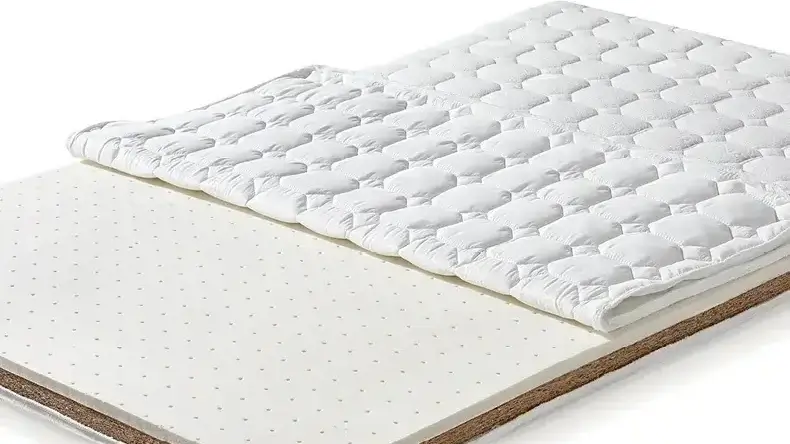
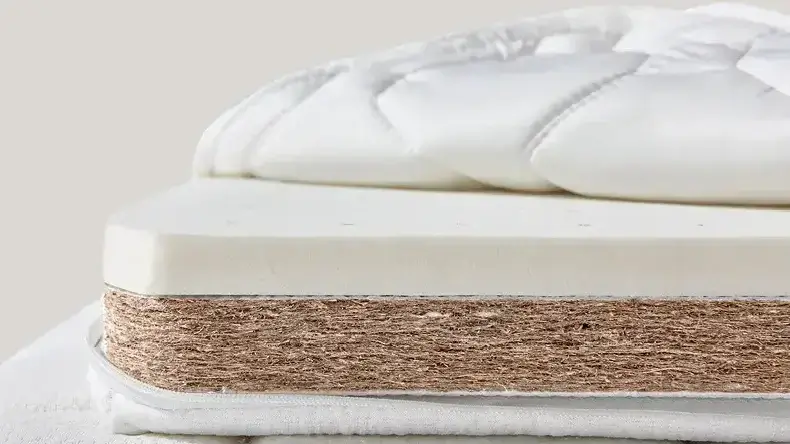
A memory foam mattress generally contains a comfort layer, one or more transition layers, and a foam support base.
The top layers influence how closely the mattress contours around your body. The deeper layers help support the overall structure and influence how far you sink into the surface.
Memory foam is known for its conforming feel. Instead of producing a pronounced springy response, it generally adapts to pressure and recovers its shape more gradually. The exact response depends on the foam formulation and construction.
How a Hybrid Mattress Is Built
A hybrid mattress combines a spring support core with a more substantial comfort system than a traditional innerspring mattress.
Many hybrids use individually wrapped pocket springs. Depending on the design, these coils can provide responsiveness and support while the upper layers contribute cushioning and pressure relief.
Some hybrids contain memory foam, which means choosing a hybrid does not necessarily mean giving up the contouring feel of memory foam. The difference is that a hybrid includes a coil support system beneath its comfort layers.
For more detail, read the Sleep Foundation guides to memory foam versus hybrid mattresses and different mattress types.
Quick Comparison
| Feature | Memory Foam Mattress | Hybrid Mattress |
|---|---|---|
| Main support structure | Foam support base | Spring support core |
| General feel | Contouring and cushioning | A combination of cushioning and responsiveness |
| Movement response | Often slower and less springy | Often more responsive |
| Airflow potential | Depends on foam and design | Coils may allow more airflow through the support core |
| Motion isolation | Often a strength of foam construction | Depends on coil design and comfort layers |
| Edge support | Varies by construction | May benefit from reinforced edges |
| Price | Available across different price points | Can cost more because of the additional components |
These are general characteristics, not guarantees. A well-designed foam mattress and a well-designed hybrid can perform differently from other models in the same category.
2. Is a Hybrid Mattress Better Than Memory Foam?
A hybrid mattress is not automatically better than memory foam. Each construction has potential advantages, and the right choice depends on the features that matter most to you.
Potential Advantages of Memory Foam
Memory foam may suit sleepers who prefer a close, cushioning sensation. Its conforming properties allow the surface to adapt to the shape and pressure of the body.
Another potential benefit is motion isolation. Foam can absorb movement rather than transmitting as much of it across the mattress surface. This may appeal to couples who notice small movements during the night.
However, some memory foam mattresses can feel restrictive to people who prefer quick rebound when turning. Temperature regulation also varies between models, so it is important to evaluate the complete construction rather than the material name alone.
Potential Advantages of Hybrid Mattresses
Hybrid mattresses combine the cushioning of their upper layers with the responsiveness of a spring system.
For people who dislike sinking deeply into a mattress, the spring core may create a more buoyant sensation. Some hybrid designs also offer useful edge support and allow air to circulate through the coil system.
The trade-offs depend on the design. A hybrid with thick memory foam layers may still feel contouring, and a spring system does not guarantee excellent cooling or motion isolation.
Hybrids can also be heavier and more difficult to move because of their construction.
Which One Offers Better Overall Value?
Value depends on the specific mattress, its construction, price, and the features you will actually use.
A memory foam mattress may offer the feel you want without the additional spring system. A hybrid may justify its price for someone who values a combination of cushioning, bounce, and edge stability.
Rather than deciding by category alone, compare specifications and test the actual mattress when possible. Look at the layers, support structure, firmness options, and purchasing terms before making a decision.
3. Hybrid Mattress vs Memory Foam for Side Sleepers
Side sleepers often pay particular attention to pressure around the shoulders and hips. These areas carry substantial contact pressure when the body rests on its side, so the mattress needs to provide comfortable cushioning without allowing excessive sinking.
Both hybrid and memory foam mattresses can work for side sleepers. The important factor is how the specific mattress accommodates the individual’s body shape, weight, and preferred firmness.
When Memory Foam May Suit Side Sleepers
Memory foam can contour around the shoulders and hips, creating a close-fitting sensation.
This may appeal to people who want the mattress surface to adapt more closely to their body. It can also help reduce the feeling of direct contact with a rigid surface.
However, too much sinking may make it harder for some people to change positions. A soft comfort layer is not necessarily the right choice if the overall mattress does not feel supportive.
When comparing memory foam models, evaluate the firmness, comfort-layer construction, and how easily you can move while lying down.
When a Hybrid May Suit Side Sleepers
A hybrid mattress can combine cushioning foam or latex with a spring support core. This construction may appeal to side sleepers who want surface pressure relief but prefer a more responsive feeling underneath.
The comfort layers are especially important. A hybrid with suitable cushioning may feel quite different from one with thinner or firmer upper layers.
Do not assume that every hybrid is firm or that every memory foam mattress is soft. Both categories include different firmness options and constructions.
How to Test Either Type
When testing a mattress, lie on your side in your usual sleeping position and pay attention to your shoulders and hips.
Notice whether the surface feels uncomfortably hard, whether you sink more than you prefer, and whether you can change positions without difficulty. If you share a bed, also consider how the other sleeper responds to the same surface.
There is no single firmness level that suits every side sleeper. Body weight, body shape, personal preference, and mattress design all affect the result.
The goal is to find a comfortable balance between cushioning and support rather than choosing a material simply because it is marketed for side sleeping.
4. Which Mattress Sleeps Cooler: Memory Foam or Hybrid?
Temperature regulation is a useful factor to consider if you often feel hot during the night.
Traditional memory foam can retain more heat than some other mattress constructions, but not every foam mattress behaves the same way. Foam formulation, surface fabrics, ventilation features, and layer arrangement can change the overall experience.
Memory Foam and Temperature Regulation
Memory foam mattresses vary considerably in how they manage heat.
Some designs include open-cell foam, gel-infused materials, or other features intended to change heat transfer or airflow. However, the presence of a cooling label does not guarantee that a mattress will feel cool to every sleeper.
The cover fabric and bedding also influence how warm the sleep surface feels.
When comparing memory foam products, look for clear material specifications and test the actual mattress if possible. Focus on the complete construction rather than assuming that one ingredient determines temperature performance.
Why Some Hybrid Mattresses May Feel Cooler
A hybrid mattress has a coil support core that can allow air to circulate through the spring area. This can provide an airflow advantage over some all-foam designs.
Yet the upper comfort layers still matter. A thick layer of memory foam may retain heat even when the mattress underneath contains springs.
A hybrid using latex or different foam formulations may feel different from one using a thick memory foam comfort system.
What Should Hot Sleepers Choose?
If temperature is a priority, compare the cover material, comfort layers, and support structure together.
A hybrid is worth considering if you want a spring-based structure and a responsive feel. A foam mattress may still be suitable if its materials and design meet your comfort preferences.
Also consider bedroom temperature, bedding, sleepwear, and other environmental factors. A mattress is only one part of the sleeping environment.
No construction guarantees a cool night’s sleep for everyone. Product-specific details and personal experience are more useful than relying on broad marketing claims.
5. Which Is Better for Couples: Motion Isolation or Edge Support?
For couples, choosing between a hybrid mattress and memory foam often involves balancing motion isolation with responsiveness and usable sleeping space.
These features are related to construction, but they are not the same. A mattress may absorb movement well without offering the edge support you want, or it may have stable edges while transmitting more motion across the surface.
Motion Isolation
Motion isolation describes how much movement on one side of a mattress is felt on the other side.
Memory foam often performs well in this area because the material can absorb movement. This may be helpful if one person frequently changes position while the other is a light sleeper.
Hybrid mattresses vary more widely. Individually wrapped pocket coils can reduce movement transfer compared with some interconnected spring systems, while the foam or latex comfort layers also influence the result.
If motion disturbance is important, test how the mattress responds when your partner rolls over or gets out of bed.
Edge Support
Edge support describes how stable the mattress feels near its perimeter.
This feature matters if you sit on the edge to get dressed, sleep close to the side, or want to make practical use of the full mattress width.
Some hybrids include reinforced edges that help stabilize the perimeter. However, edge support is not guaranteed by the presence of coils alone. Foam mattresses can also use different edge-support designs.
Check the actual product construction and sit near the edge during a test if possible.
Responsiveness and Ease of Movement
Memory foam can create a slower, more enveloping feel. Some people enjoy this because the mattress closely conforms to their body; others prefer a surface that responds more quickly when they turn.
Hybrid mattresses often feel more buoyant because of the spring core. That may make movement easier for some sleepers, although the comfort layers still influence how quickly the surface responds.
For couples, the better choice depends on whether you prioritize limited movement transfer, a springier surface, edge stability, or a particular combination of these features.
6. Compare Price, Durability, and Maintenance
Price and long-term ownership should be part of the comparison, but the mattress category alone does not determine value or durability.
Compare the Total Price
Hybrid mattresses may cost more than some all-foam models because they use a spring system in addition to comfort layers. However, prices vary across brands, materials, sizes, and construction levels.
Instead of treating one type as always cheaper, compare mattresses with similar sizes and features.
Check whether the listed price includes delivery, setup, removal of an old mattress, or other services. If a mattress is sold online, review the return policy and any charges that could affect the total cost.
Which Type Lasts Longer?
There is no reliable rule that every hybrid mattress lasts longer than every memory foam mattress.
Durability depends on material quality, manufacturing, construction, how often the mattress is used, the support underneath it, and maintenance.
A foam comfort layer can change over time, while a hybrid’s comfort layers and spring system may age differently from each other. Neither construction guarantees a particular service life.
Inspect product specifications and warranty conditions rather than choosing by category alone. For related guidance, read our article on how long a mattress lasts.
Maintenance and Practical Use
Both mattress types need appropriate care.
Use a suitable mattress protector, clean spills according to the manufacturer’s instructions, and keep the mattress dry. Check the recommended bed-frame or foundation requirements before installation.
Some mattresses can be rotated to distribute wear, but rotation is not appropriate for every design. Follow the instructions provided for the specific product.
Hybrid mattresses can be heavier because they contain a coil core, which may make moving or rotating them more difficult. The actual weight depends on the size and construction.
A useful buying decision considers not only how the mattress feels today, but also its specifications, maintenance requirements, and the terms that apply if a problem develops.
7. What to Check Before Buying a Hybrid or Memory Foam Mattress
Once you understand the main differences, use a consistent checklist to compare individual products. This helps prevent a familiar mistake: choosing a mattress based on its category name without checking how it is actually built.
Check the Material Layers
Read the product specifications to determine what is inside the mattress.
For a memory foam model, check the comfort layers, supporting foam, and any details about the cover or ventilation features. For a hybrid, check the spring system and the materials used above it.
If the product description is vague, ask the seller for clarification rather than assuming that similar names mean similar construction.
Evaluate Firmness and Comfort
A medium-firm label does not guarantee that two mattresses will feel the same. Layer thickness, foam formulation, spring design, and body weight all influence the experience.
Compare firmness options when available. If you cannot test the mattress in person, review the seller’s trial and return conditions before purchasing.
Confirm Bed-Frame Compatibility
Check the recommended base, foundation, or slat spacing. Do not assume a mattress can be used on every frame or adjustable base.
Following the manufacturer’s requirements can help ensure that the mattress is properly supported and that you do not inadvertently violate warranty conditions.
Read the Trial and Warranty Terms
Confirm whether the mattress has a home trial, how the return process works, and whether shipping or collection fees apply.
Read the warranty to understand what types of defects are covered, what exclusions apply, and whether specific foundation requirements must be met.
Do not assume that a trial period or a particular warranty length is included with every mattress.
Match the Mattress to Your Priorities
Use this comparison as a practical starting point:
| Your Main Priority | What to Consider |
|---|---|
| A close, contouring feel | Compare memory foam comfort layers |
| Easier movement across the surface | Test responsive hybrid designs |
| Less movement felt from a partner | Compare motion-isolation performance |
| Better airflow through the support core | Look at hybrid construction and comfort layers |
| Stable edges | Check the model’s edge-support design |
| Lower purchase cost | Compare equivalent sizes, materials, and included services |
These priorities are not exclusive to one category. The best choice comes from matching the specific mattress design to the features you need.
If you are interested in a spring-based mattress with foam comfort layers, you can also review Easy&Rest’s gel memory foam pocket spring mattress and compare its listed construction and materials with other models.
8. Hybrid Mattress vs Memory Foam FAQs
Is a Hybrid Mattress Firmer Than Memory Foam?
Not necessarily. A hybrid mattress can feel soft, medium, or firm depending on its comfort layers and spring system. Memory foam mattresses also come in different firmness levels. Compare the actual model rather than assuming that one category is always firmer.
Which Is Better for Side Sleepers: Hybrid or Memory Foam?
Both can suit side sleepers. Memory foam may appeal to those who prefer close contouring around the shoulders and hips, while a hybrid may suit people who want cushioning combined with a more responsive feel. The right choice depends on body shape, weight, firmness preference, and the specific mattress construction.
Is Memory Foam Better for Motion Isolation?
Memory foam often absorbs movement well, which can be useful for couples. However, performance varies by model. Hybrid mattresses with individually wrapped coils and appropriate comfort layers can also limit motion transfer. Compare the actual construction instead of relying solely on the mattress category.
Can a Hybrid Mattress Contain Memory Foam?
Yes. Many hybrid mattresses use memory foam or other foam materials in their comfort layers above a spring support core. Others use latex or different materials. Check the product specifications to determine exactly what the mattress contains.
Final Thoughts
The main difference in the hybrid mattress vs memory foam comparison is the support structure: all-foam construction versus a combination of coils and comfort layers. That difference can influence contouring, responsiveness, airflow, motion isolation, and edge support.
Neither type is automatically the best choice for everyone. Compare the specific materials, firmness, construction, and purchasing terms, then consider how those features fit your sleeping habits and priorities. A careful product comparison is more useful than choosing based on a single marketing claim.