
The mattress manufacturing process involves much more than assembling foam, springs, and fabric. Manufacturers must complete several production stages to ensure that each mattress meets its required material, construction, dimension, and appearance specifications.
From raw material inspection to final packaging, every stage contributes to the quality and consistency of the finished product.
Understanding how manufacturers make mattresses helps consumers learn more about the materials and workmanship behind their products. Additionally, mattress brands, wholesalers, importers, and hospitality buyers can use this knowledge to evaluate manufacturing suppliers.
1. Product Design and Technical Specifications
Every mattress production project starts with product planning and technical design.
First, manufacturers define the product requirements. These specifications guide material selection, production procedures, and final quality inspections.
Important design considerations include:
Mattress Dimensions: Manufacturers define the required length, width, and finished thickness according to the target market.
Support Structure: The engineering team selects an appropriate core construction, such as pocket springs, continuous foam, or a combination of materials.
Comfort Layers: Designers specify the cushioning materials, including memory foam, natural latex, polyurethane foam, and other fillings.
Firmness: The team establishes the intended firmness level and selects suitable materials and construction methods.
Cover Design: Designers choose the fabric, quilting pattern, border construction, stitching, and finishing details.
Packaging: The production team determines whether the mattress requires flat packaging, vacuum compression, roll packing, or another suitable method.
For customized products, manufacturers and buyers should approve a technical specification sheet before prototype production. This document provides a common reference for sampling, bulk manufacturing, and quality inspection.
2. Raw Material Procurement and Incoming Inspection
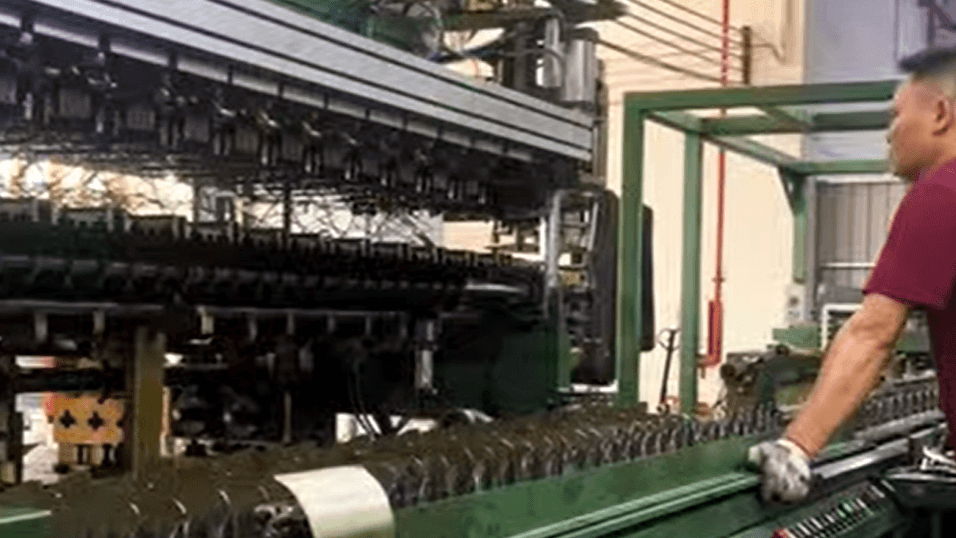
After the team approves the product specifications, purchasing staff source the required materials and arrange incoming inspections.
A mattress may contain several components, depending on its construction.
| Material | Common Applications | Inspection Considerations |
|---|---|---|
| Steel springs | Innerspring and hybrid cores | Dimensions, wire specifications, and construction |
| Memory foam | Comfort and transition layers | Density, firmness, thickness, and consistency |
| Polyurethane foam | Comfort and support layers | Material properties and dimensions |
| Natural latex | Comfort and support layers | Specifications, thickness, and consistency |
| Coir fiber | Structural and cushioning layers | Thickness, uniformity, and material condition |
| Knitted fabric | Mattress covers | Weight, appearance, color, and defects |
| Jacquard fabric | Mattress covers | Pattern consistency and textile quality |
| Accessories | Zippers, labels, handles, and threads | Dimensions, strength, and compatibility |
During incoming inspection, quality control staff compare the materials with the approved specifications. As a result, they can identify material variations before production begins.
For OEM mattress manufacturing, buyers should request clear material specifications rather than rely solely on appearance or supplier descriptions.
3. Foam Processing and Support Core Preparation
After incoming inspection, production teams prepare the foam and support components. However, the exact process depends on the mattress design and the factory’s manufacturing capabilities.
Foam Preparation
Some manufacturers produce foam internally, while others purchase foam blocks or finished foam sheets from specialist suppliers.
When a factory produces polyurethane foam internally, technicians process the raw materials according to a specific chemical formulation. Next, the foam expands and undergoes curing. After curing, operators prepare the material for further processing.
Factories that purchase foam from external suppliers follow a different route. Their quality teams inspect the incoming foam and confirm that it meets the approved specifications.
Foam preparation may include:
- Checking the supplied foam material.
- Confirming the required density and firmness.
- Cutting foam blocks into specified dimensions.
- Producing individual foam layers.
- Preparing components for mattress assembly.
Spring Core Preparation
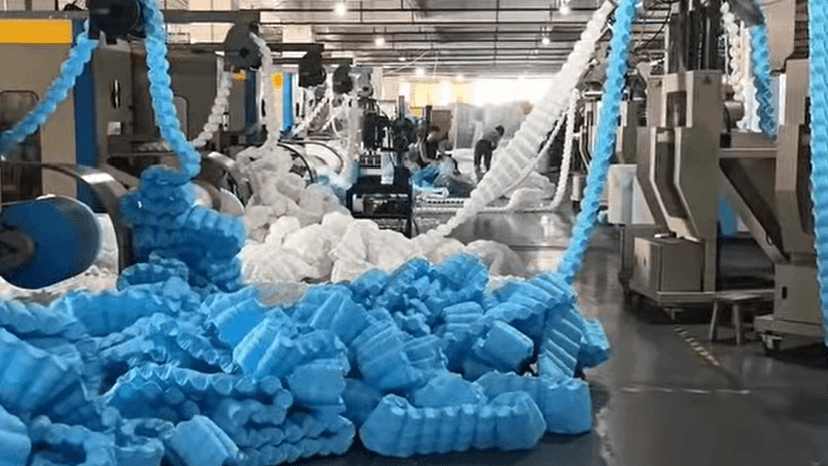
For innerspring and hybrid mattresses, the factory may manufacture the spring unit internally or purchase it from a specialist supplier.
Depending on the design, the support core may use Bonnell, offset, continuous-wire, or individually wrapped pocket springs.
Before assembly, quality control staff check the spring unit against the agreed product specifications.
Latex and Coir Preparation
Latex and coir components require their own preparation procedures.
For example, technicians check the dimensions, material consistency, and compatibility of each component with the intended mattress design.
Not every mattress factory produces these materials internally. Therefore, the production route depends on the factory’s equipment, supply chain, and product requirements.
4. Precision Cutting and Component Preparation
Once the factory prepares and inspects the materials, operators cut or process them into the required dimensions.
This stage matters because inaccurate measurements can affect the finished mattress profile and assembly quality.
Common operations include:
Foam Cutting: Operators cut foam blocks or sheets into specified thicknesses, lengths, and widths.
Edge Component Preparation: Production teams prepare reinforcement materials according to the approved mattress design.
Fabric Cutting: Cutting machines prepare the top, bottom, and side panels of the mattress cover.
Accessory Preparation: Workers organize handles, zippers, labels, and decorative components for assembly.
For custom mattress orders, operators should follow the approved technical drawings. Consequently, accurate cutting helps reduce fitting problems during assembly and minimizes unnecessary material waste.
5. Mattress Quilting and Cover Manufacturing
The mattress cover contributes to both product appearance and surface comfort.
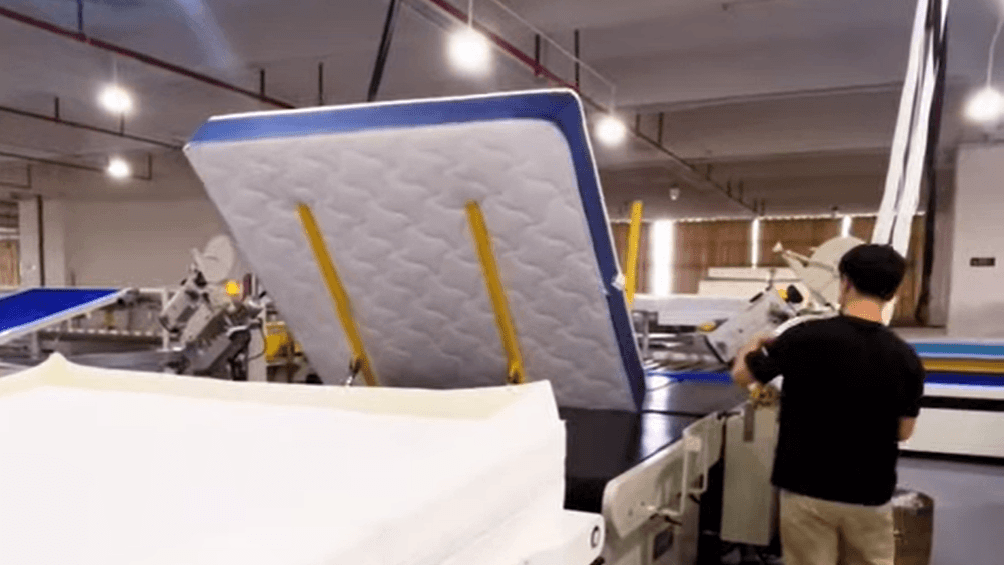
Many mattress designs combine fabric with additional cushioning materials through a quilting process.
During quilting, operators join selected fabric and padding layers with controlled stitching patterns.
The process generally includes:
- Preparing the top fabric.
- Positioning foam or fiber padding.
- Setting the required quilting pattern.
- Stitching the fabric layers together.
- Checking stitching consistency and fabric alignment.
After quilting, operators cut the finished material into individual top, bottom, and side panels.
Depending on the design, the cover may also include zippers, handles, labels, piping, or ventilation features.
Finally, quality control staff inspect the completed cover components before assembly.
6. Mattress Layering and Assembly
At this stage, production teams combine the individual components to create a complete mattress.
The assembly method depends on the mattress construction. For example, a hybrid mattress combines a spring support core with foam or other comfort materials. In contrast, an all-foam mattress uses multiple foam layers without a metal spring core.
Common assembly components include:
Support Core: This component forms the main structural foundation of the mattress.
Insulating Layer: Some designs use an insulating layer to separate or protect different internal materials.
Comfort Layers: Manufacturers select foam, latex, or other materials to create the intended surface feel.
Quilting and Upholstery: These components complete the sleeping surface and contribute to the mattress appearance.
During assembly, workers arrange each component according to the approved construction design.
Some mattresses require adhesives to secure selected layers. However, other designs use specified mechanical or alternative joining methods.
The factory must follow the approved joining process. For instance, a glue-free mattress design should retain its specified glue-free construction throughout production.
Finally, operators check material positioning and layer alignment to maintain the intended dimensions and comfort characteristics.
7. Cover Closing, Edge Finishing and Final Stitching
After assembly, operators fit the outer cover around the mattress and complete the finishing work.
This stage gives the mattress its final shape and appearance.
Typical operations include:
Cover Fitting: Workers position the top, bottom, and side panels around the assembled mattress.
Side Border Attachment: Sewing operators connect the border panels to the top and bottom sections.
Tape-Edge Sewing: Operators finish the perimeter seams on mattress designs that use this construction.
Handle Installation: Workers attach carrying handles according to the product specification.
Label and Logo Placement: The team adds the required product information, brand labels, and identification details.
During final finishing, quality inspectors check for uneven seams, wrinkles, incorrect dimensions, and other visible defects.
The exact finishing process depends on the product design. For example, a conventional sewn cover may require a different assembly method from a zippered encasement.
8. Mattress Quality Control and Product Testing
Quality control should cover the entire manufacturing process rather than focus only on the finished mattress.
A practical inspection programme includes several stages.
Incoming Material Inspection
Quality inspectors check whether the received materials match the approved specifications.
For example, they may examine foam dimensions, spring specifications, fabric appearance, and accessory requirements.
In-Process Inspection
During production, supervisors inspect important operations such as cutting, quilting, layer arrangement, assembly, and stitching.
As a result, the production team can identify errors before they affect the finished product.
Finished Mattress Inspection
Before packaging, inspectors examine the completed mattress for:
- Overall length, width, and thickness.
- Surface appearance and condition.
- Stitching and edge finishing.
- Material and construction consistency.
- Firmness or other agreed performance characteristics.
- Packaging and product labeling.
Performance Testing
Manufacturers can also use applicable test methods to evaluate durability, firmness, impact resistance, material properties, and other performance characteristics.
For example, ASTM F1566 provides test methods for evaluating innersprings, boxsprings, mattresses, and mattress sets. These methods support comparative evaluation, but they do not establish universal pass-or-fail criteria.
Similarly, Intertek lists mattress testing services that cover standards such as ASTM F1566, EN 1957, and ASTM D3574.
For products subject to U.S. federal mattress flammability requirements, manufacturers must also follow applicable quality assurance procedures.
Under 16 CFR § 1633.6, manufacturers must maintain controls and inspections to ensure that production mattress sets remain consistent with the qualified or confirmed prototype in materials, components, design, and assembly methods.
These requirements apply to relevant U.S. products. Therefore, manufacturers should not present them as universal requirements for every mattress sold worldwide.
9. Mattress Packaging, Roll Packing and Shipment
After final inspection, packaging teams prepare the mattresses for storage or shipment.
The selected packaging method depends on the mattress construction, materials, shipping requirements, and customer specifications.
Flat Packaging
Some manufacturers package mattresses in their finished shape and protect them with suitable plastic or other packaging materials.
This method avoids the need for full compression and rolling.
Vacuum Compression and Roll Packing
Manufacturers can compress and roll selected mattress constructions into smaller packages.
The process generally includes:
- Positioning the completed mattress.
- Applying the specified protective packaging.
- Compressing the mattress with suitable equipment.
- Folding or rolling the mattress when the construction allows.
- Securing the package and placing it into the shipping carton.
However, not every mattress can undergo compression and roll packing.
For example, some spring constructions with rigid perimeter components cannot be folded and rolled into a box. Therefore, manufacturers must evaluate the materials and construction before choosing a compression method.
The production team should also establish appropriate compressed-storage limits for each approved mattress design.
Export Preparation
For international wholesale orders, packaging teams may also prepare:
- Carton identification.
- Product and barcode labels.
- Packing lists.
- Shipping documentation.
- Container loading arrangements.
- Order-specific packaging requirements.
Finally, the shipping team checks the order details and prepares the products according to the agreed delivery specifications.
What Should Buyers Check When Evaluating a Mattress Manufacturer?
Understanding the production process helps mattress brands, importers, distributors, and hospitality buyers evaluate manufacturing suppliers.
Before placing a bulk order, buyers should review the following:
| Evaluation Item | Questions to Ask the Manufacturer |
|---|---|
| Material sourcing | Can the supplier provide material specifications? |
| Product design | Does the manufacturer provide an approved technical specification sheet? |
| Prototype | Can the factory produce a sample before bulk manufacturing? |
| Production consistency | How does the quality team inspect materials and construction? |
| Quality testing | Which test methods and inspection records can the supplier provide? |
| Packaging | Does the selected packaging suit the mattress design? |
| Customization | Can the manufacturer customize dimensions, fabrics, firmness, and materials? |
| Documentation | Can the supplier provide the required product and shipping documents? |
For customized projects, buyers should approve a prototype before bulk production. In addition, both parties should use the approved sample and technical specification as references during subsequent inspections.
This approach helps reduce misunderstandings and creates a clearer quality standard between the manufacturer and buyer.
Frequently Asked Questions
How Long Does It Take to Manufacture a Mattress?
Production time depends on the mattress construction, material availability, order quantity, customization requirements, and factory schedule. Therefore, standard catalogue orders and fully customized projects may require different lead times.
What Materials Are Used to Make a Mattress?
Manufacturers may use steel springs, polyurethane foam, memory foam, natural latex, coir, textile fabrics, fiber padding, and other components. The selected materials depend on the intended construction.
Are All Mattresses Made Using the Same Manufacturing Process?
No. Foam, innerspring, hybrid, and other mattress designs require different component preparation and assembly methods. However, most production routes include material inspection, component preparation, assembly, finishing, quality control, and packaging.
What Is the Difference Between a Mattress Prototype and a Mass-Production Sample?
A prototype helps manufacturers confirm the product design, materials, dimensions, and construction. Once the buyer approves the prototype, the manufacturer can use it as a reference for bulk production and subsequent quality inspections.
Can a Manufacturer Customize a Mattress?
Yes. Depending on the factory’s capabilities, manufacturers can customize dimensions, comfort materials, firmness, fabric, quilting, labels, and packaging. However, major construction changes may require a new prototype before mass production.
Final Thoughts
The mattress manufacturing process involves several connected operations, from product design and raw material inspection to component preparation, quilting, assembly, finishing, quality control, and packaging.
Each stage contributes to the construction and consistency of the finished mattress.
For consumers, understanding these steps provides a clearer view of the materials and workmanship behind a mattress. Meanwhile, mattress brands, importers, and hospitality buyers can use this knowledge to evaluate technical specifications, prototype approval procedures, inspection methods, and packaging capabilities.
Easy&Rest provides OEM and ODM mattress manufacturing solutions for customized mattress development, material selection, private-label production, and wholesale supply.
Additionally, explore our mattress product collections to learn more about different mattress constructions and available product options.