
Choosing the right mattress can make a difference to your sleeping comfort. But should you buy a soft or firm mattress?
The answer depends on several factors, including your sleeping position, body weight, personal comfort preferences, and how much support you need. Neither a soft mattress nor a firm mattress is the best choice for everyone.
In this guide, we compare soft and firm mattresses, explain what research tells us about mattress firmness, and help you decide which option may suit your needs.
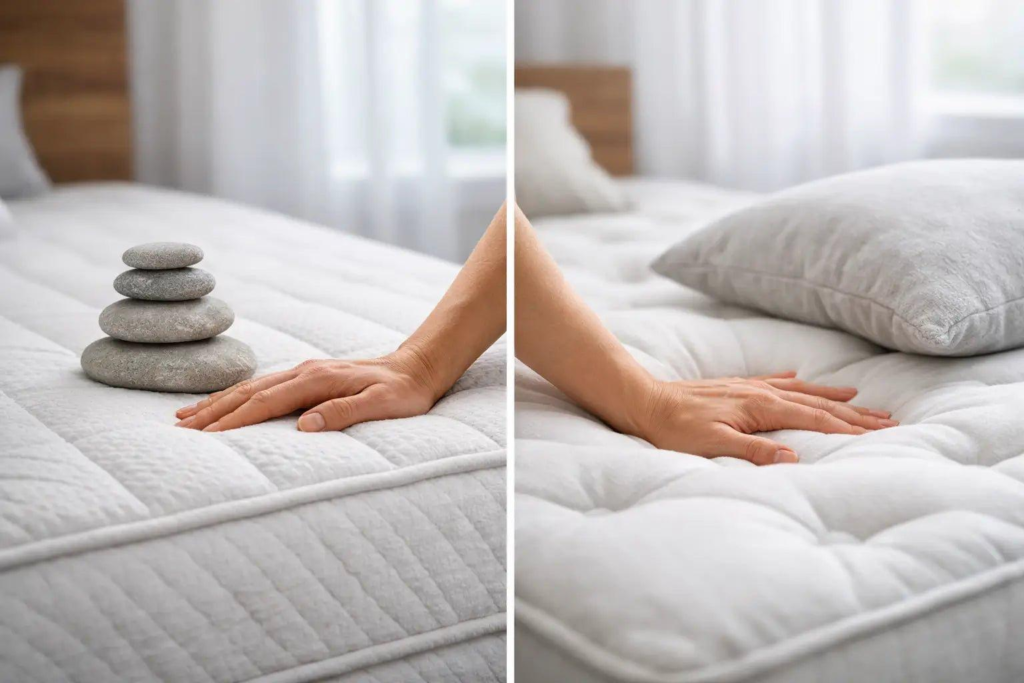
1. Soft vs. Firm Mattress: What’s the Difference?
A mattress’s firmness describes how soft or hard it feels when you lie on it. Support describes how well it accommodates your body without allowing uncomfortable or excessive sinking.
These two characteristics are related, but they are not the same. A soft mattress can still provide support, and a firm mattress is not automatically more supportive for every sleeper.
What Is a Soft Mattress?
A soft mattress generally allows more compression and contouring around the body.
Potential advantages:
- May feel more comfortable to people who prefer a plush sleeping surface.
- Can provide additional cushioning around the shoulders and hips.
- May suit some side sleepers who find firmer surfaces uncomfortable.
Things to consider:
- It may feel too soft if your body sinks more than you find comfortable.
- The amount of support depends on the mattress’s overall construction, not just its surface softness.
What Is a Firm Mattress?
A firm mattress generally feels more resistant to compression and allows less sinking.
Potential advantages:
- May suit people who prefer a stable, less-cushioned surface.
- Can be a useful option for sleepers who dislike the feeling of sinking into a mattress.
- May suit some people depending on their body weight and sleeping position.
Things to consider:
- It may feel uncomfortable if it creates too much pressure around your shoulders or hips.
- A firm label alone does not guarantee that a mattress will provide the right support for your body.
2. Which Mattress Firmness Is Best for Your Sleeping Position?
Your sleeping position is a useful starting point when comparing mattresses. However, the following recommendations are general guidelines rather than medical rules.
Side Sleepers
Side sleepers may prefer a softer or medium-feel mattress because their shoulders and hips come into greater contact with the sleeping surface.
If you sleep on your side, consider whether the mattress provides enough cushioning without allowing uncomfortable sinking.
Back Sleepers
Back sleepers may find medium to medium-firm mattresses comfortable, but individual preferences vary.
When testing a mattress, pay attention to whether your body feels comfortably supported and whether you experience pressure or discomfort.
Stomach Sleepers
Some stomach sleepers prefer a firmer mattress because they want to avoid sinking too deeply around the hips and abdomen.
However, firmness alone does not determine whether a mattress is suitable. Your body weight, mattress design, and comfort preferences also matter.
Combination Sleepers
If you change positions throughout the night, consider a mattress that balances cushioning, support, and ease of movement.
A medium-feel mattress can be a starting point, but it is worth comparing different options rather than assuming one firmness level will work for everyone.
For further guidance, see Sleep Foundation’s guide to choosing a firm or soft mattress.
3. Does Body Weight Affect Mattress Firmness?
Yes. Body weight can influence how much a mattress compresses and how firm it feels to an individual sleeper.
Sleep Foundation identifies body weight as one of the factors to consider when choosing mattress firmness.
Lightweight Sleepers
Lighter sleepers may experience less compression of the mattress layers. As a result, a firm mattress may feel harder than expected.
A softer option may be worth trying if you prefer more cushioning.
Average-Weight Sleepers
Sleepers of average weight can compare several firmness levels based on their sleeping position and comfort preferences.
Pay attention to how the mattress feels when you lie in your usual sleeping position rather than relying only on its product description.
Heavier Sleepers
Heavier sleepers may compress the same mattress more than lighter sleepers do. A firmer option may be worth considering if a softer mattress allows more sinking than feels comfortable.
However, the mattress’s materials and support construction also matter. Body weight alone cannot determine the ideal firmness.
Important: These are general shopping considerations, not scientifically fixed rules for every weight category.
4. Is a Soft or Firm Mattress Better for Back Pain?
There is no universal answer. Research suggests that choosing a mattress based on the belief that firmer is always better is not justified.
A randomized, double-blind, multicentre clinical trial published in The Lancet in 2003 studied 313 adults with chronic nonspecific lower back pain. Participants were assigned either a firm or a medium-firm mattress.
After 90 days, the medium-firm mattress group had better outcomes on several measures of pain and disability than the firm mattress group.
Source: Kovacs et al., The Lancet, 2003 — PubMed.
This study provides evidence that a firm mattress is not necessarily the best choice for people with lower back pain. However, the findings apply to the population studied and should not be interpreted as proof that medium-firm mattresses are best for everyone.
When choosing a mattress, consider both comfort and support. If back pain persists or interferes with daily activities, seek advice from a healthcare professional.
5. Soft vs. Firm Mattress: A Quick Comparison
| Factor | Soft Mattress | Firm Mattress |
|---|---|---|
| Feel | More cushioned | More resistant to compression |
| Body sinking | Generally greater | Generally less |
| Side sleeping | May suit those who prefer more cushioning | May feel too hard for some |
| Back sleeping | Depends on comfort and support | May suit those who prefer less sinking |
| Stomach sleeping | May feel too soft for some | May suit those who prefer a stable surface |
| Personal preference | Best for people who enjoy a plush feel | Best for people who prefer a firmer feel |
This table describes general characteristics, not guaranteed outcomes. Actual comfort depends on the mattress design and the person using it.
6. Five Things to Check Before Buying a Mattress
1. Your Usual Sleeping Position
Think about whether you mainly sleep on your side, back, or stomach. Use this as a starting point when comparing firmness options.
2. Your Body Weight
Consider how much you sink into different mattresses. A mattress that feels firm to one person may feel softer to another.
3. Comfort and Support
Do not choose based on softness alone. Consider whether the mattress feels comfortable and provides the level of support you prefer.
4. Mattress Materials
Memory foam, latex, and pocket spring mattresses can have different feels depending on their construction.
For example, foam layers can provide varying levels of contouring, while spring systems can influence responsiveness and overall support. Material names alone do not determine firmness.
5. Trial and Return Policies
If you buy online, check whether the seller offers a sleep trial, how long it lasts, and what conditions apply to returns.
This can help you evaluate a mattress at home rather than making your decision based on a short showroom visit.
7. Frequently Asked Questions
Should I buy a soft or firm mattress?
Choose based on your sleeping position, body weight, comfort preferences, and the support you need. Neither option is universally best.
Is a firm mattress better for your back?
Not necessarily. A randomized clinical trial found better outcomes on several measures for medium-firm mattresses than for firm mattresses among adults with chronic nonspecific lower back pain. Individual needs may differ.
Do side sleepers need a soft mattress?
Not always. Some side sleepers prefer softer surfaces for cushioning, while others prefer a firmer feel. Comfort and adequate support should guide the decision.
Is medium-firm a good mattress choice?
Medium-firm is worth considering, particularly if you are unsure where to start. Research has found benefits compared with firm mattresses in a specific study of adults with chronic nonspecific lower back pain. This does not establish medium-firm as the best option for everyone.
How can I tell if my mattress is too firm?
If you regularly experience uncomfortable pressure when lying down, the mattress may not suit your needs. Consider testing a different firmness level and evaluating the overall comfort and support.
Conclusion
So, should you buy a soft or firm mattress?
A soft mattress may be worth considering if you prefer a cushioned feel, while a firm mattress may suit you if you prefer less sinking. Your sleeping position, body weight, and personal comfort all influence how a mattress feels.
Research on lower back pain also shows that firmer is not always better. Instead of choosing based on a single rule, compare mattresses carefully and look for the balance of comfort and support that works for you.
The best mattress is not necessarily the softest or firmest one. It is the one that meets your individual needs.