
A coil mattress uses metal springs as part of its support system. These springs respond to body weight and movement, helping provide support, responsiveness, and a more buoyant sleeping feel. Depending on the construction, a coil mattress may use interconnected springs or individually wrapped pocket coils.
However, not all coil mattresses feel the same. The type of springs, wire thickness, comfort layers, and edge construction can all influence how a mattress performs.
Understanding these differences can help you compare mattress designs, evaluate product specifications, and choose a construction that suits your needs.
1. What Is a Coil Mattress?
A coil mattress is a mattress that uses a steel spring system as its main support core. The springs compress under pressure and return toward their original shape when the pressure is removed.
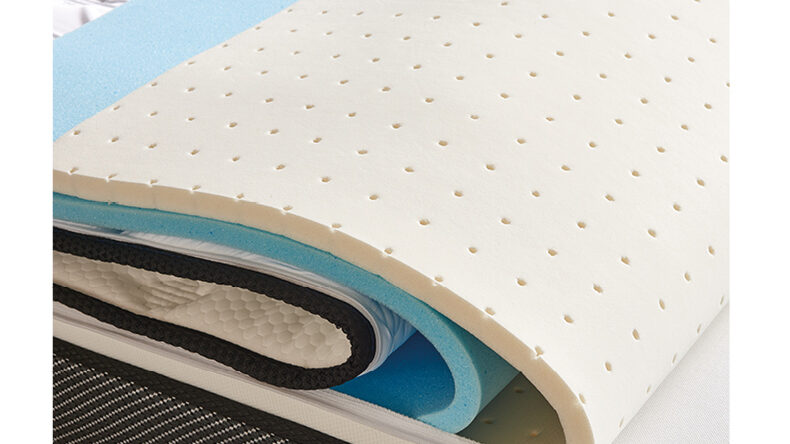
Most coil mattresses also contain comfort materials above the spring system. These may include:
- Memory foam for body contouring.
- Natural latex for responsive cushioning.
- Polyurethane foam for additional comfort.
- Fiber padding for surface softness.
- Knitted or jacquard fabric for the outer cover.
Some traditional innerspring mattresses use relatively thin comfort layers, while hybrid mattresses combine a coil support core with more substantial foam or latex layers.
According to the Sleep Foundation’s guide to mattress coil types, the four main coil designs used in mattress support cores are Bonnell, offset, continuous-wire, and pocketed coils.
2. Four Main Types of Mattress Coils
The spring system is one of the most important differences between coil mattresses. Each construction has its own characteristics, advantages, and limitations.
Bonnell Coils
Bonnell coils have a traditional hourglass shape. Each spring is wider at the top and bottom and narrower in the middle. The coils are connected through helical wires, allowing the spring unit to work as an interconnected system.
Main characteristics:
- Relatively straightforward manufacturing construction.
- Firm and responsive support.
- Usually more affordable than more complex spring systems.
- Movement can transfer across interconnected coils.
- Contouring is generally more limited than with individually wrapped springs.
Bonnell systems are commonly associated with traditional innerspring mattress designs.
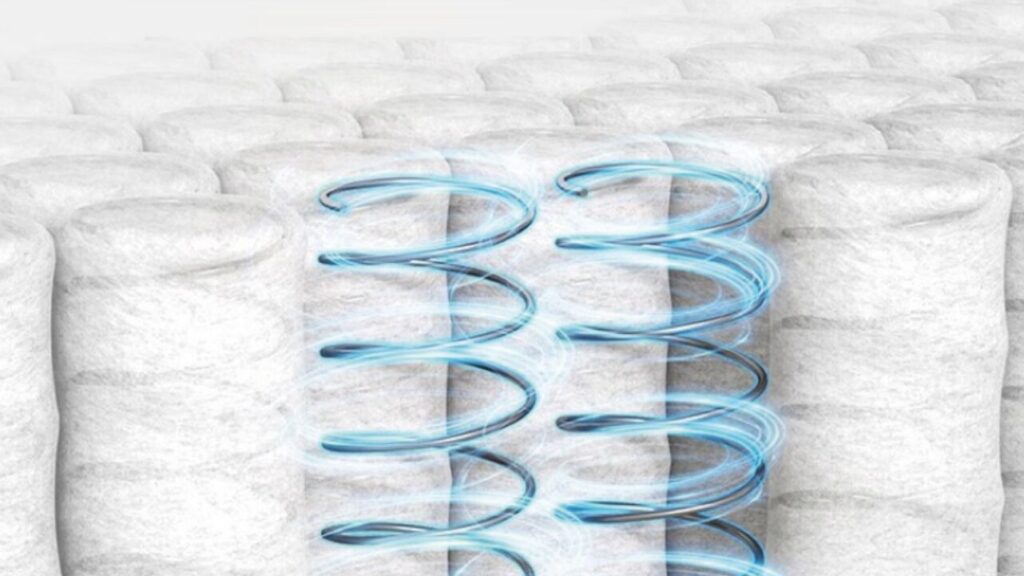
Pocket Coils
Pocket coils, also called individually wrapped coils, are enclosed in separate fabric pockets. Each spring can respond more independently to pressure.
Main characteristics:
- More localized response to body weight.
- Can help reduce motion transfer between sleeping partners.
- Adapt to pressure in different areas of the mattress.
- Commonly used in modern hybrid mattresses.
- Construction complexity can increase manufacturing costs.
The actual performance depends on the coil arrangement, spring specifications, comfort layers, and edge support.
Explore our pocket spring mattress collection to see how individually wrapped springs can be incorporated into different mattress designs.
Continuous-Wire Coils
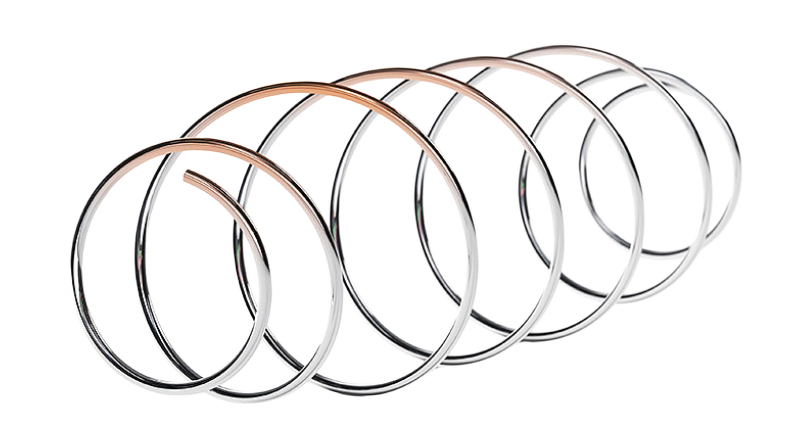
Continuous-wire systems are made from a single length of wire formed into rows of interconnected coils. Helical wires connect the rows to help maintain the spring structure.
Main characteristics:
- Relatively efficient manufacturing process.
- Stable and responsive support.
- Can provide a firm sleeping feel.
- Interconnected construction may transfer movement.
- Generally offers less individual contouring than pocket coils.
The comfort layers above the spring system play an important role in determining the final mattress feel.
Offset Coils
Offset coils are related to traditional Bonnell springs but have squared or flatter sections around the top and bottom of the coil.
This design allows the springs to flex in a hinge-like manner under pressure, potentially providing more localized response than conventional Bonnell constructions.
Main characteristics:
- Hourglass-inspired spring structure.
- More localized flex under certain pressure conditions.
- Can provide stable, supportive performance.
- Still uses an interconnected spring arrangement.
- Generally involves a more specialized manufacturing design.
The differences between these four systems are explained in greater detail in the Sleep Foundation mattress coil guide.
3. Coil Mattress Pros and Cons
Coil mattresses have several advantages, but they are not automatically suitable for every sleeper.
| Advantages | Possible Limitations |
|---|---|
| Responsive and buoyant sleeping feel | Some designs transfer more movement |
| Supportive spring foundation | Comfort depends on the upper layers |
| Space between coils can allow airflow | Cooling is not guaranteed |
| Multiple spring designs available | Construction quality varies |
| Can be combined with foam and latex | Some designs may produce noise |
Advantages of Coil Mattresses
Responsive Support
Metal springs compress and recover under pressure. This creates a buoyant feel that makes changing sleeping positions relatively easy.
Potential Airflow
The spaces within a spring system can allow air movement through the support core. However, the cover, comfort materials, and complete mattress construction also influence temperature.
Different Comfort Options
Coil systems can be combined with different foam densities, latex layers, fabric covers, and firmness configurations.
Versatile Construction
Manufacturers can develop different spring systems for residential, commercial, and hospitality applications.
Potential Disadvantages
Motion Transfer
Connected spring systems may transmit movement across the mattress. Individually wrapped pocket coils can help reduce this effect, although the complete mattress construction still matters.
Limited Surface Cushioning
A spring support core alone does not provide the same close body contouring as a thick memory foam comfort layer. The upper materials determine much of the surface feel.
Possible Noise
Some interconnected spring designs can produce noise as the metal components move against one another, especially as materials wear.
Variable Durability
A coil mattress is not automatically long-lasting simply because it contains steel springs. Spring specifications, comfort-layer quality, construction, and everyday use all affect durability.
4. Coil Count vs. Coil Gauge: What Really Matters?
When comparing coil mattresses, you may come across two important terms: coil count and coil gauge.
They describe different aspects of the spring system.
What Is Coil Count?
Coil count refers to the total number of springs inside a mattress.
However, a higher coil count does not automatically mean better support or longer durability.
Different spring designs use different coil sizes and arrangements. Individually wrapped pocket coils, for example, may use more individual springs than traditional Bonnell systems.
Therefore, comparing two mattresses by coil count alone can be misleading.
When evaluating coil count, consider:
- Mattress size.
- Type of spring construction.
- Individual coil dimensions.
- Coil arrangement and distribution.
- Whether additional perimeter support is included.
What Is Coil Gauge?
Coil gauge describes the thickness of the steel wire used to manufacture a spring.
A lower gauge number generally indicates thicker wire, while a higher gauge number indicates thinner wire.
This can influence how the spring responds to pressure.
| Specification | General Meaning |
|---|---|
| Lower gauge | Thicker wire, generally firmer spring response |
| Higher gauge | Thinner wire, generally more flexible spring response |
| Coil count | Number of individual springs |
| Spring construction | How the coils are shaped and connected |
Gauge should not be considered a universal quality rating. The steel material, heat treatment, coil height, number of turns, and overall design also influence performance.
For more technical details, refer to the Sleep Foundation’s explanation of coil count and gauge.
5. Coil Mattress vs. Hybrid Mattress vs. Memory Foam Mattress
These mattress types are often compared because they use different support and comfort materials.
| Feature | Coil Mattress | Hybrid Mattress | Memory Foam Mattress |
|---|---|---|---|
| Main support | Metal spring system | Usually pocket springs | Foam support core |
| Surface feel | Depends on comfort layers | Depends on foam and spring combination | Often closer contouring |
| Responsiveness | Usually higher | Depends on construction | Usually lower |
| Motion isolation | Varies by spring type | Depends on spring and foam design | Often good |
| Construction | Springs with comfort materials | Springs with substantial comfort layers | Multiple foam layers |
Coil Mattress
A coil mattress emphasizes spring-based support and responsiveness. Its surface feel depends on the padding and comfort materials placed above the spring system.
Hybrid Mattress
A hybrid mattress combines a spring support system with more substantial comfort layers, commonly memory foam or latex.
This combination allows manufacturers to create different balances of cushioning, responsiveness, and support.
Explore our luxury hybrid mattress collection to compare different spring and comfort-layer constructions.
Memory Foam Mattress
A traditional all-foam memory foam mattress uses foam materials for both comfort and its support structure rather than a metal coil support core.
To understand the differences between foam layers, read our guide to memory foam mattress layers.
Neither construction is universally better. The right option depends on the desired feel, body support, temperature preferences, and budget.
6. How to Choose a Coil Mattress
Choosing a coil mattress requires more than checking the number of springs. Consider the complete construction before making a decision.
Check the Spring Structure
Identify whether the mattress uses Bonnell, offset, continuous-wire, or individually wrapped pocket coils.
Each design responds differently to pressure and movement.
Compare Comfort Layers
The materials above the spring system influence surface softness, cushioning, and body contouring.
Look at the material type, thickness, and density when these specifications are available.
Evaluate Edge Support
Some mattresses use reinforced perimeter coils or high-density foam around the edges.
This can help improve stability when sitting or sleeping near the sides of the mattress.
Consider Motion Transfer
Couples may prefer pocket coil constructions because their individual springs can respond more independently than interconnected spring systems.
However, motion isolation also depends on the comfort layers and overall design.
Review Durability Information
Look beyond marketing claims and ask for information about:
- Spring wire specifications.
- Coil construction and arrangement.
- Comfort-layer materials.
- Edge reinforcement.
- Warranty terms.
- Available product testing documentation.
The Sleep Foundation’s mattress durability methodology explains why the quality of both comfort layers and support materials matters when evaluating mattress durability.
7. Frequently Asked Questions About Coil Mattresses
Is a coil mattress good for everyday use?
A well-constructed coil mattress can provide responsive support for everyday sleeping. The right option depends on the spring structure, comfort layers, firmness, and individual preferences.
Are pocket coils better than Bonnell coils?
They provide different sleeping experiences. Pocket coils respond more independently to localized pressure and can reduce motion transfer. Bonnell coils use an interconnected structure and are often a more economical construction.
Neither is automatically better for every application.
Do more coils mean a better mattress?
No. Coil count alone does not determine mattress quality. Spring type, wire gauge, steel quality, comfort materials, and construction all matter.
Do coil mattresses sleep cooler?
The open spaces within a coil system can provide opportunities for airflow. However, temperature performance also depends on foam layers, cover fabrics, bedding, and the sleep environment.
How long does a coil mattress last?
There is no single lifespan that applies to every coil mattress. Durability depends on the quality of the comfort layers, spring construction, materials, frequency of use, and maintenance.
Look at the manufacturer’s warranty and available durability information rather than relying on a fixed lifespan claim.
Are coil mattresses suitable for people with back pain?
There is no single coil construction or firmness level that works for everyone with back discomfort.
The mattress should provide a balance of comfort and support that suits the individual’s body and sleeping preferences. Persistent back pain should be discussed with a qualified healthcare professional.
Final Thoughts
A coil mattress uses a metal spring system to provide support and responsiveness, but different coil constructions can create very different sleeping experiences.
Bonnell, offset, continuous-wire, and pocket coils each have their own characteristics. Understanding coil count, wire gauge, comfort layers, and edge support can help you evaluate a mattress beyond its marketing description.
For shoppers comparing spring-based designs, explore the Easy&Rest pocket spring mattress collection and hybrid mattress collection.
For mattress retailers, importers, and hospitality buyers, Easy&Rest also provides OEM and ODM mattress manufacturing solutions for customized mattress materials, spring systems, and private-label requirements.