

Choosing between a spring and latex mattress can be difficult because both can provide strong support and comfortable sleep. The main difference is how each material responds to your body, handles movement, manages temperature, and feels over time. This spring vs latex mattress guide breaks down seven key differences so you can compare the options more clearly.
For a broader overview of mattress types, it helps to look at the construction underneath the comfort layers, not only the surface feel.
1. Construction
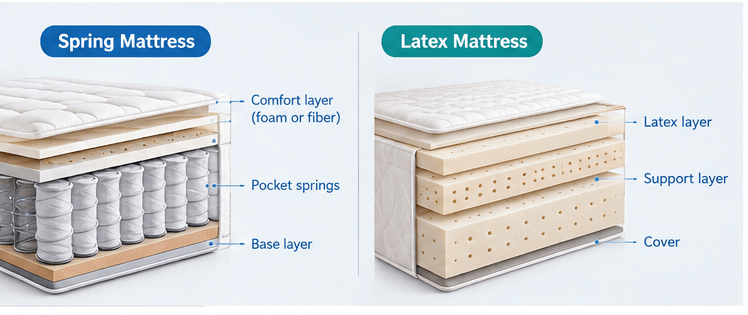
A spring mattress uses coils as its main support system. Traditional innerspring designs use interconnected coils, while modern pocket spring mattresses use individually wrapped coils that can respond more independently to movement.
A latex mattress uses latex foam as a major comfort or support layer. Latex can be made from natural or synthetic materials and is known for a responsive, slightly buoyant feel. Some mattresses combine latex with pocket springs in a hybrid design.
2. Feel and Comfort
Spring mattresses generally have a noticeable bounce. Pocket springs can make it easier to move across the surface and change positions during the night. The exact feel depends on coil count, coil gauge, comfort layers, and firmness.
Latex mattresses also feel responsive, but the surface is often more uniform and buoyant. Latex tends to provide contouring without the deeper sinking sensation associated with some softer foams.
3. Support
Both spring and latex mattresses can offer strong support when they are properly designed. Springs provide support through the coil system, while latex provides support through its density, resilience, and overall construction.
When comparing support, the mattress support core construction is an important factor to examine along with firmness and comfort-layer thickness.
For couples or sleepers who move often, pocket springs can also help provide more localized response than older interconnected spring designs.
4. Pressure Relief
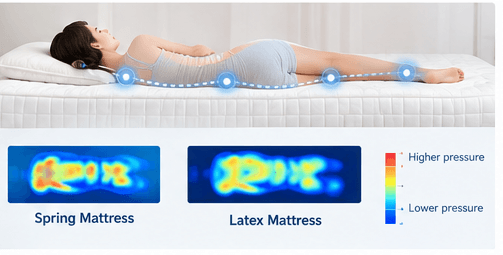
Latex can cushion common pressure areas such as the shoulders and hips while maintaining a responsive feel. A spring mattress can also provide good pressure relief when the coil system is paired with suitable foam, latex, or fiber comfort layers.
Pressure relief is influenced by the complete mattress design, including firmness and materials, rather than one component alone. A useful reference is this overview of mattress pressure relief.
5. Breathability and Temperature
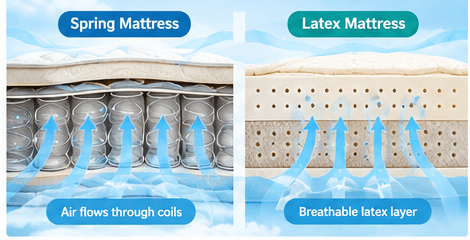
Spring mattresses have open space around their coils, which can allow air to move through the support layer. This can contribute to a more ventilated feel, although the comfort materials and cover still affect temperature regulation.
Latex can also feel breathable because of its structure, especially in designs that use ventilated latex, breathable covers, and airflow-friendly support layers. In both mattress types, the sleep environment and bedding can affect how warm the bed feels.
6. Durability
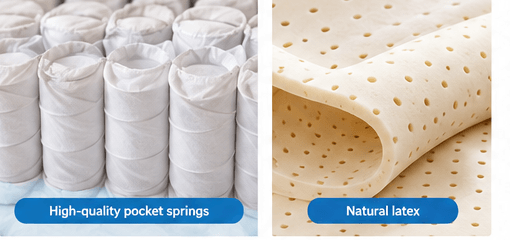
Durability depends on the quality of the complete mattress rather than the material name alone. High-quality pocket springs can perform well over time, while quality latex is valued for resilience and its ability to recover its shape.
When comparing two mattresses, look at the construction, material specifications, edge support, cover quality, and manufacturing standards. A well-designed hybrid can combine a durable spring support system with resilient latex comfort layers.
7. Price
Spring mattresses are available across a wide price range. Basic innerspring models can be relatively affordable, while premium pocket spring and hybrid mattresses can cost more because of their construction and materials.
Latex mattresses are often positioned at a higher price point, especially when they use a high percentage of natural latex. The final price depends on thickness, latex quality, spring specifications, cover materials, manufacturing standards, and brand positioning.
What About a Latex Hybrid Mattress?
A latex hybrid mattress combines a pocket spring support system with one or more latex comfort layers. This design can provide the responsive surface feel of latex together with the structure and airflow of a spring core.
For shoppers who want characteristics from both mattress types, a latex hybrid can be a practical option to consider. Easy&Rest also offers pocket spring and natural latex mattress configurations for home and wholesale applications.
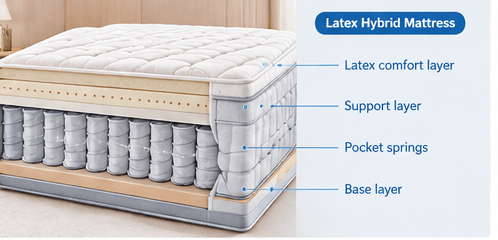
You can also explore our natural latex mattress options, our OEM mattress manufacturing solutions, or contact our team for product and customization information.
Spring vs Latex Mattress: Which One Should You Choose?
There is no single choice that works for every sleeper. A spring mattress may appeal to people who prefer bounce, easier movement, and an open coil structure. A latex mattress may suit sleepers who prefer a resilient, slightly buoyant surface with a more uniform feel.
Your sleep position, preferred firmness, body comfort, temperature preferences, budget, and mattress construction all matter. Comparing the full specification is usually more useful than choosing based only on the material name.
Spring vs Latex Mattress: Final Thoughts
The main spring vs latex mattress differences come down to construction, feel, support, pressure relief, airflow, durability, and price. Springs and latex can both perform well when the mattress is correctly designed and matched to the sleeper.
For shoppers who want support and responsiveness with a combination of materials, a latex hybrid mattress can bring pocket springs and latex together in one design. The best match depends on your personal preferences and the specifications of the mattress you are comparing.