
Choosing the right mattress firmness can be confusing when you experience back discomfort. Some people believe a hard mattress provides better support, while others prefer a softer surface that cushions the body. Neither choice is automatically right for everyone.
The relationship between mattress firmness and back pain depends on several factors, including sleeping position, body shape, personal comfort, and the construction of the mattress. A surface that feels supportive to one person may feel uncomfortable to another.
This guide explains how mattress firmness may affect sleeping comfort, why support is different from hardness, and how to evaluate a mattress before buying one. It also reviews what research can tell us, without treating a mattress as a cure for back pain.
1. What Does Research Say About Mattress Firmness and Back Pain?
Mattress firmness has been studied as one factor that may influence sleep comfort and lower-back discomfort. The evidence does not support the simple rule that a harder mattress is always better for the back.
A randomized controlled trial published in The Lancet compared firm and medium-firm mattresses among adults with chronic, nonspecific lower-back pain. The researchers reported better outcomes for the medium-firm group on several measures after the study period.
However, these findings should be interpreted in context. The trial examined a particular group of people with a specific type of back pain. It does not establish that medium-firm mattresses will help everyone, nor does it mean that mattress firmness can treat every cause of back pain.
A 2022 evidence review from the Canadian Agency for Drugs and Technologies in Health also noted that the available evidence had limitations.
Why Medium-Firm Is Often a Reasonable Starting Point
A medium-firm mattress may be worth testing if you are unsure where to begin. It can provide a balance between surface cushioning and resistance to excessive sinking, although the actual feel depends on the product and the person using it.
Rather than choosing a mattress simply because it is labeled medium-firm, consider three questions:
- Does the surface feel comfortable in your usual sleeping position?
- Does it support your body without creating uncomfortable pressure?
- Can you change positions without feeling trapped or unstable?
A mattress that meets these practical criteria may be a better candidate than one chosen solely by its firmness label.
Why There Is No Universal Firmness Recommendation
Back discomfort can have many causes, and a mattress is only one part of the sleeping environment. Body proportions, sleeping posture, pillows, daily activities, and underlying health conditions may also influence symptoms.
The Mayo Clinic’s discussion of common back-pain myths cautions against assuming that a firm mattress is best for everyone.
The practical lesson is to treat mattress firmness as an individual comfort decision informed by evidence, not as a medical prescription.
2. Mattress Firmness vs. Support: What Is the Difference?
Firmness and support are often used as though they mean the same thing, but they describe different aspects of a mattress.
Firmness refers to how soft or hard the surface feels when you lie down. Support refers to how the complete mattress responds to your body and helps you remain in a comfortable sleeping position.
Understanding the difference can help you avoid choosing a mattress that feels hard but does not meet your needs.
A Firm Surface Is Not Automatically Supportive
A mattress can feel firm at first contact but still be unsuitable for your body. If the surface creates excessive pressure or does not accommodate your body shape, the initial feeling of firmness may not translate into comfortable support.
Similarly, a mattress that feels softer on the surface can still have a supportive underlying structure.
This is why two mattresses with similar firmness ratings can feel different after you lie on them.
Cushioning and Support Work Together
The comfort layers influence the first sensation you notice when lying down. The deeper layers contribute to how the mattress responds as your body settles into the surface.
A suitable mattress should balance these functions according to your needs. You should not have to choose between a surface that feels comfortable and a bed that feels stable.
The appropriate balance depends on your sleeping position, body shape, weight distribution, and personal preferences.
Do Not Rely on Firmness Labels Alone
Terms such as soft, medium, medium-firm, and firm are helpful for narrowing choices, but ratings are not perfectly consistent across all manufacturers.
One company’s medium-firm mattress may feel different from another company’s medium-firm design because their materials and construction are different.
When possible, compare products from the same range and examine the specifications. Consider the surface feel, how far you sink, and whether you remain comfortable after settling into your usual sleeping position.
3. How to Choose Mattress Firmness for Back Pain and Your Sleeping Position
Your sleeping position can help guide your firmness search because different positions place pressure on different parts of the body. However, position is only one factor, and no firmness level is guaranteed to suit everyone with back discomfort.
Side Sleepers
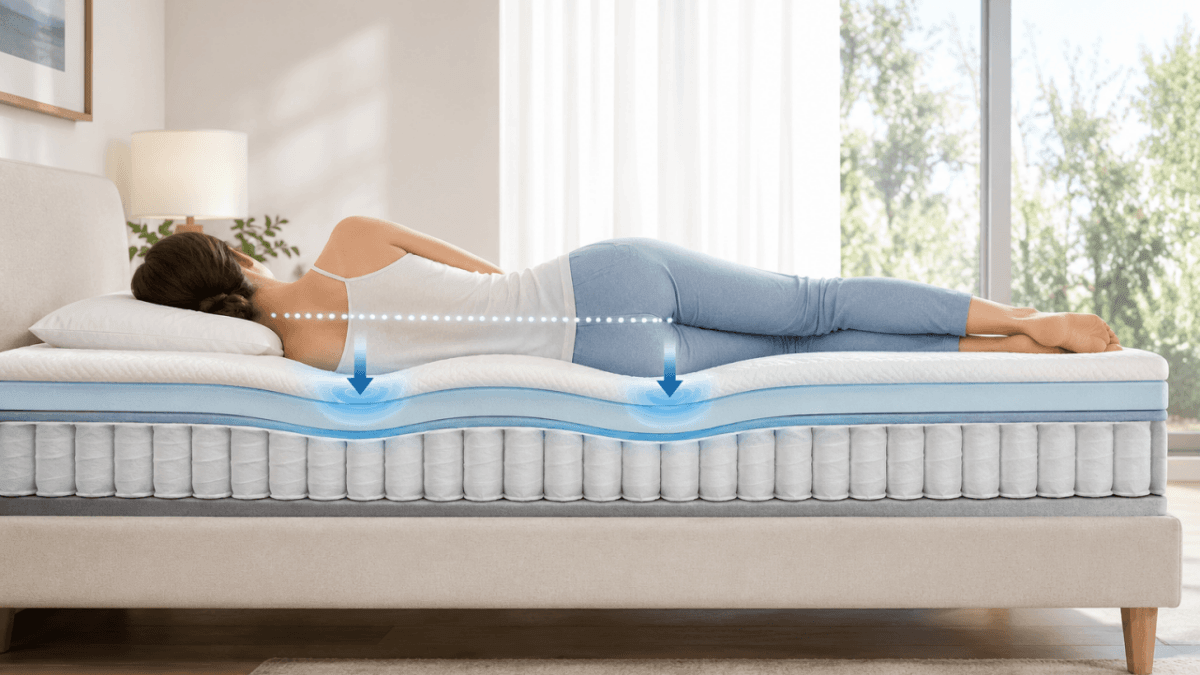
Side sleepers place more direct pressure on the shoulders and hips. A mattress that feels too hard may create uncomfortable pressure at these contact points, while a surface that allows excessive sinking may feel unstable.
If you sleep on your side, pay attention to how the mattress cushions your shoulders and hips while supporting the rest of your body.
A softer or medium-feel surface may be worth comparing if you prefer more cushioning. A firmer design may still work for some side sleepers, depending on body shape and construction.
The important consideration is the actual sensation, not an assumption that side sleepers must always choose a soft mattress.
Back Sleepers
Back sleepers may want to assess how the mattress accommodates the natural curves of the body.
When lying on your back, notice whether your lower back feels comfortably supported. An extremely hard surface may feel uncomfortable for some people, while a mattress that allows too much sinking may not feel stable.
A medium-firm mattress can serve as a useful comparison point, but your comfort and the design of the product should determine the final choice.
Stomach Sleepers
Stomach sleepers should pay attention to how much the hips and abdomen sink into the mattress.
If the middle of the body sinks more than feels comfortable, consider comparing a more supportive surface. However, do not assume that the hardest mattress available is automatically the best option.
Choose a mattress that feels stable and comfortable without creating excessive pressure.
Combination Sleepers
If you change positions during the night, responsiveness may matter as much as the initial firmness.
Some mattresses make turning easier because their materials respond quickly. Others create a more enveloping sensation that some sleepers enjoy but others find restrictive.
When testing a mattress, try your usual positions and notice whether the surface remains comfortable as you move.
Firmness Starting Points by Sleeping Position
| Sleeping Position | What to Evaluate | What to Avoid |
|---|---|---|
| Side sleeping | Cushioning around shoulders and hips | Excessive pressure or sinking |
| Back sleeping | Comfortable support around the lower back | A surface that feels too rigid or unstable |
| Stomach sleeping | Stability around the hips and abdomen | Excessive sinking |
| Combination sleeping | Comfort in multiple positions and ease of turning | Feeling trapped when repositioning |
This table offers practical starting points, not medical advice or fixed rules. Personal comfort, mattress construction, and the cause of any back pain should all be considered.
4. How to Tell If Your Mattress Is Too Soft or Too Firm
The way a mattress feels can provide useful clues about whether its firmness suits you. However, discomfort does not automatically mean that the mattress is responsible for your symptoms.
Changes in bedding, sleeping posture, daily activity, and health can also affect how you feel when waking up.
Signs a Mattress May Feel Too Firm
A surface may be too firm for your preferences if you notice uncomfortable pressure where your body contacts the mattress.
For example, side sleepers may find the shoulders or hips feel pressed against the surface. Other sleepers may simply find it difficult to relax into a comfortable position.
If this happens, compare a model with more cushioning. You do not necessarily need a dramatically softer mattress; a different comfort layer or construction may be enough to change the feel.
Signs a Mattress May Feel Too Soft
A mattress may feel too soft if you sink more deeply than you prefer or struggle to turn over comfortably.
You may also notice that the surface feels uneven or that certain areas remain depressed when nobody is lying on the bed.
These observations should be separated from the general sensation of softness. A soft mattress can still be appropriate for some people, while an older mattress with worn materials may no longer provide the same support it did when new.
Check for Physical Wear
Inspect the surface for persistent indentations, lumps, damaged stitching, or visible deterioration.
Also check the bed frame and foundation. An unsuitable or damaged base can affect the way a mattress sits and feels.
If you suspect a support problem, examine the entire setup before deciding that mattress firmness alone is the cause.
Keep a Simple Comfort Record
Instead of judging a mattress after one night, pay attention to patterns in your comfort over time when it is safe and practical to do so.
Note your sleeping position, whether you found it easy to settle down, and whether the surface felt uncomfortable in particular areas.
This record cannot diagnose the cause of back pain, but it can help you describe what you experience when comparing mattresses or discussing persistent symptoms with a healthcare professional.
5. How to Test Mattress Firmness Before Buying
A mattress label tells you something about the intended feel, but testing the product can reveal whether that feel suits your body.
If a showroom or home trial is available, use a consistent method to compare mattresses instead of choosing based on appearance or a brief impression.
Lie in Your Usual Sleeping Position
Spend time lying on the mattress in the position you use most often. Notice whether the surface feels comfortable and whether any areas experience uncomfortable pressure.
If you normally change positions during the night, test those positions too.
Check How Easily You Can Move
Turn from your side to your back and back again. Notice whether you can reposition comfortably or whether the mattress feels as though it resists your movement.
This is especially relevant if you prefer a more responsive surface or tend to change positions frequently.
Compare Similar Products
When comparing firmness, try mattresses with similar dimensions and broadly comparable construction where possible.
Changing several features at once makes it harder to understand why one mattress feels different from another. Compare firmness alongside material type, comfort layers, and the support core.
Review the Trial and Return Terms
If you buy online, read the seller’s current policy before purchasing. Check the trial period, return conditions, fees, and any requirements concerning the condition of the mattress.
Do not assume that every manufacturer offers a home trial or a risk-free return.
Mattress Testing Checklist
| Check | Question to Ask |
|---|---|
| Initial comfort | Does the surface feel comfortable when I lie down? |
| Pressure | Do my shoulders, hips, or other contact points feel uncomfortable? |
| Support | Does the mattress feel stable in my usual position? |
| Movement | Can I turn and reposition comfortably? |
| Consistency | Does the mattress remain comfortable in other sleeping positions? |
| Purchase terms | Can I return or exchange the mattress under clear conditions if needed? |
The purpose of testing is to identify the surface that feels most suitable to you, not to prove that a particular firmness level will cure back pain.
6. Which Mattress Materials Affect Firmness and Support?
Firmness is influenced by the complete mattress construction, not just the material listed in the product name. Foam, latex, springs, and hybrid designs can all provide different sensations depending on how they are made and combined.
Memory Foam
Memory foam generally creates a contouring sensation. Depending on the formulation, it may respond more slowly to pressure and allow the body to settle into the comfort layer.
Some people prefer this close-fitting feel, while others prefer a more responsive surface.
When comparing memory foam mattresses, check the layers, firmness options, and ease of movement rather than assuming all foam designs feel the same.
Latex
Latex mattresses are commonly associated with a more resilient feel, although the result depends on the latex formulation and the rest of the mattress.
If you prefer cushioning without feeling deeply enveloped by the surface, a latex model may be worth testing. However, material type alone does not establish the best firmness for your back.
Innerspring Mattresses
Innerspring mattresses use a spring system as a major part of their support structure. Their surface feel depends on the padding, cover, spring design, and other components.
For an introduction to spring construction, read our guide to what a coil mattress is.
Hybrid Mattresses
Hybrid mattresses combine a spring support system with foam, latex, or other comfort materials. These layers can create a mix of cushioning and responsiveness.
A hybrid is not automatically firmer or better for back discomfort than an all-foam mattress. The result depends on the actual materials and structure.
When comparing products, read the specifications and evaluate the complete construction rather than choosing based on the category name alone.
7. What Else Should You Consider When Back Pain Affects Sleep?
Mattress firmness is only one possible factor in sleeping comfort. Before changing mattresses, consider whether other parts of your sleeping setup or daily routine may be contributing to discomfort.
Check Your Pillow and Sleeping Position
Your pillow affects how your head and neck are positioned relative to the rest of your body. A pillow that is too high or too low for your usual sleeping position may feel uncomfortable even when your mattress suits you.
Consider the entire sleep setup rather than treating the mattress as the only variable.
Inspect the Bed Frame and Foundation
An uneven, damaged, or incompatible foundation may affect the way your mattress supports your body.
Check the manufacturer’s requirements for slat spacing, foundation type, and frame compatibility. Correcting a support problem may improve the setup, although it will not repair a mattress with deteriorated internal materials.
Do Not Treat a Mattress as Medical Treatment
A change in mattress firmness may improve comfort for some people, but persistent back pain can have many causes.
If back discomfort affects daily activities, repeatedly interrupts your sleep, or does not improve, consult a qualified healthcare professional rather than relying solely on a new mattress.
Seek urgent medical assessment if back pain occurs with new bladder or bowel problems, numbness around the groin or anus, or significant or rapidly worsening weakness. These can be warning signs of a serious condition. The NHS back-pain guidance explains when urgent care is needed.
If you are researching mattress options, you can also read our broader back-pain mattress guide. That article covers the wider buying question, while this guide focuses specifically on how to evaluate firmness.
8. Mattress Firmness for Back Pain FAQs
Is a Firm Mattress Better for Back Pain?
Not necessarily. Research does not support the idea that the hardest mattress is always the best choice. A medium-firm mattress may be a reasonable starting point for some adults with nonspecific lower-back pain, but the right feel depends on the individual and the mattress construction.
Is a Medium-Firm Mattress Always the Best Choice?
No. Medium-firm is a useful starting point, not a universal solution. Body shape, sleeping position, personal comfort, and the reason for the pain all matter. Test the actual mattress when possible and seek professional advice if symptoms persist.
Can a Soft Mattress Cause Back Pain?
A mattress that allows excessive sinking or no longer provides comfortable support may contribute to an uncomfortable sleeping experience. However, back pain has many potential causes, and softness alone cannot establish why someone is experiencing symptoms.
Should I Replace My Mattress if My Back Hurts in the Morning?
Not automatically. First consider whether the mattress has visible wear, persistent sagging, or changes in how it feels. Other factors, including pillows, sleep position, and health conditions, may also be relevant. If the pain persists or worsens, consult a healthcare professional rather than assuming a mattress replacement will solve it.
Final Thoughts: Find a Firmness That Feels Supportive
Choosing mattress firmness for back pain is not simply a matter of finding the hardest surface. The goal is to identify a mattress that feels comfortable, provides suitable support, and allows you to rest in your usual sleeping positions.
Use medium-firm as a possible starting point, compare the actual construction, and pay attention to your own comfort rather than relying entirely on marketing labels. A mattress may support better sleep, but it cannot replace medical evaluation when back pain persists or warning signs appear.